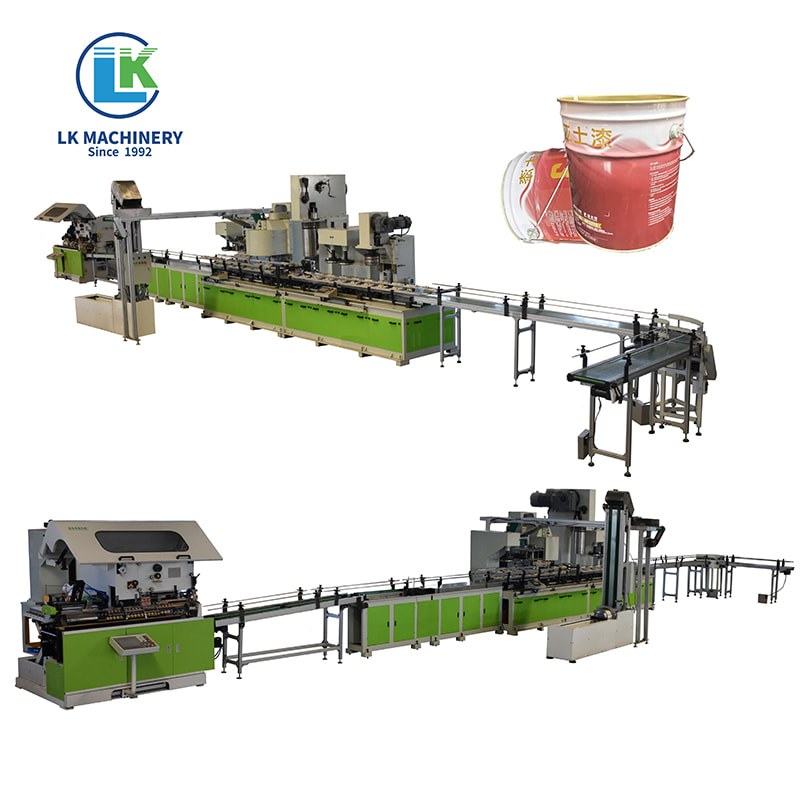
The degree of automation of the Can Lid Production Line is very high, and it is an important means to achieve efficient, stable and high-quality production in modern manufacturing. Its degree of automation is not only reflected in the advanced nature of the equipment, but also in the intelligent, integrated and systematic management of the entire production process. The following elaborates on the automation characteristics of the Can Lid Production Line from multiple aspects:
1. Wide application of automated equipment
The Can Lid Production Line is usually equipped with a variety of highly automated equipment, including:
Automatic unpacking machine: used to automatically open and unload raw material packaging bags, realize unmanned operation, and avoid errors and safety hazards caused by manual handling.
Automatic feeding system: Through conveyor belts, vibrating plates, robotic arms and other equipment, raw materials (such as metal sheets) are accurately delivered to the processing area to ensure continuous production.
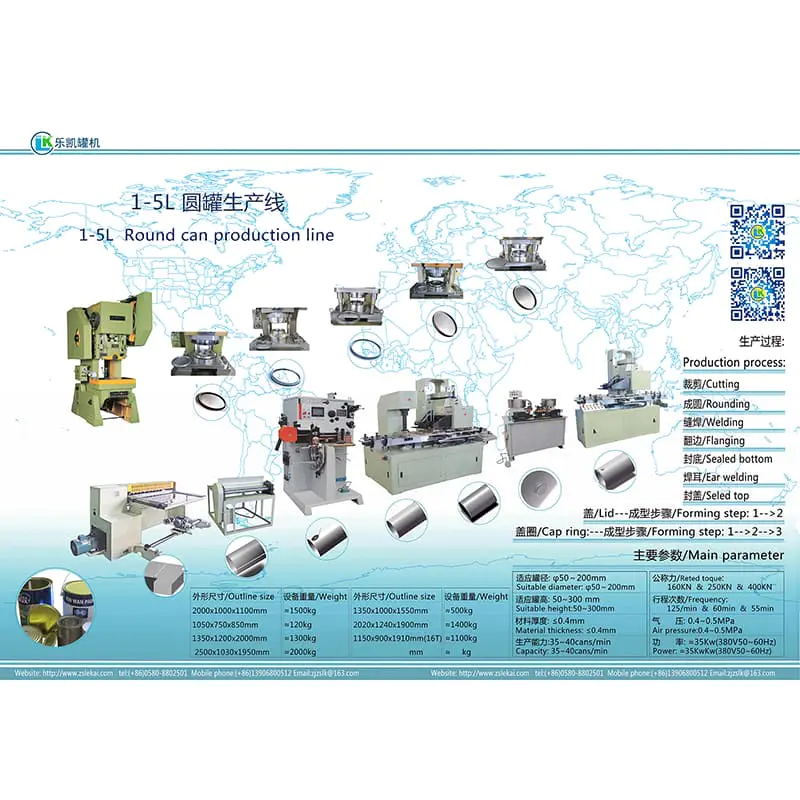
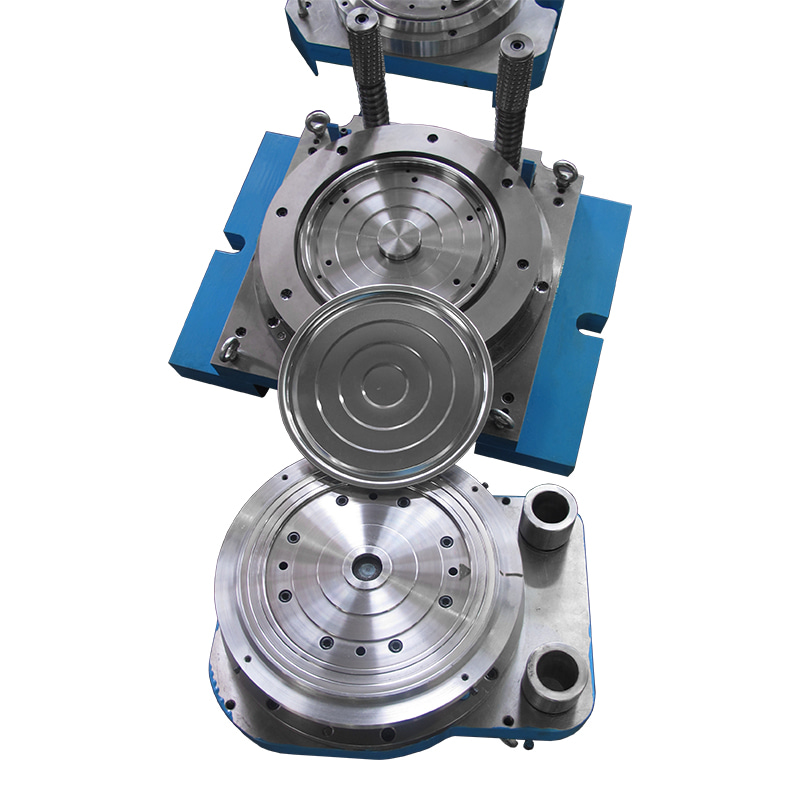
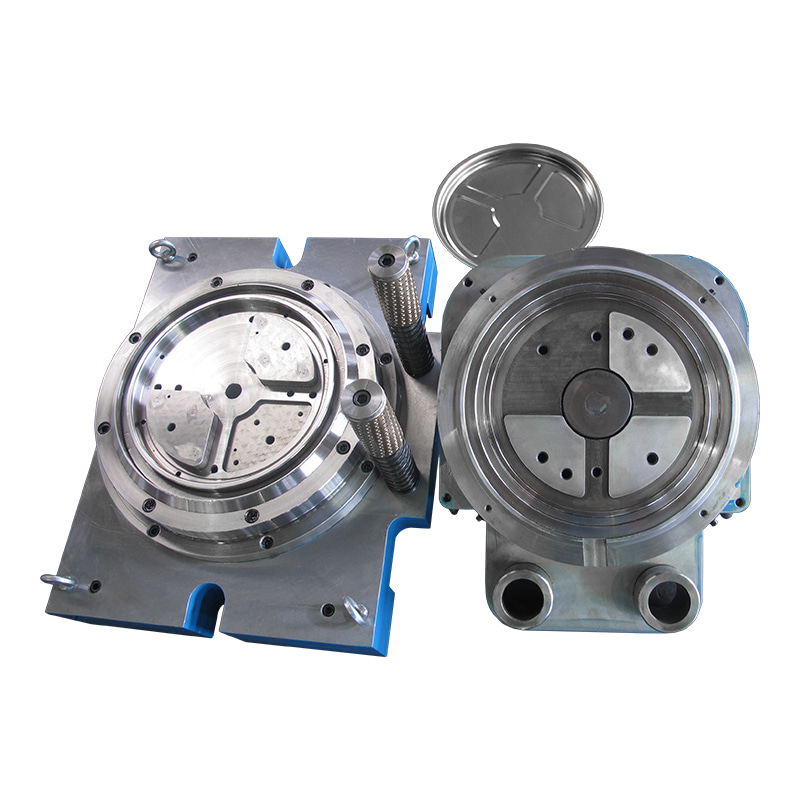
Automatic cutting and forming equipment: Using high-precision CNC cutting machines and punching machines, it can automatically complete the cutting, punching, forming and other processes of metal plates according to preset programs to ensure dimensional accuracy and consistency.
Automatic glue injection and drying system: After the can lid is formed, the sealant is automatically applied, cured and dried to ensure the sealing performance.
Automatic inspection and sorting system: Through visual inspection systems, laser rangefinders and other equipment, the finished products are inspected online, defective products are identified and automatically removed or classified.
Automatic packaging and palletizing system: After the finished product is inspected, it automatically enters the packaging link, such as automatic labeling, boxing, stacking, etc., to achieve unmanned packaging operations.
2. Integration of automated control systems
The can lid production line usually adopts advanced industrial automation control systems, mainly including:
PLC (Programmable Logic Controller): As the core control unit of the production line, it is responsible for coordinating the action sequence, speed, parameter settings, etc. of each device to ensure the stable operation of the production process.
SCADA (Supervisory Control and Data Acquisition System): It is used to monitor the operation status of the production line in real time, collect production data such as output, quality indicators, energy consumption, etc., and provide remote monitoring and alarm functions.
MES (Manufacturing Execution System): Integrate with the Enterprise Resource Planning System (ERP) to implement the issuance of production plans, execution tracking and quality traceability, and improve the overall production management level.
Human-machine interface (HMI): Operators can monitor and operate the production line through a touch screen or remote terminal to improve the convenience and safety of human-machine interaction.
3. Improved production efficiency brought by automation
Due to the high degree of automation of the Can Lid Production Line, its production efficiency is significantly higher than that of traditional manual production lines. Specifically, it is manifested in the following aspects:
Reduce manual intervention: Most processes are completed automatically by machines, reducing the need for manual operation and reducing the human error rate.
Increase production speed: Automated equipment can achieve high-speed continuous operation, and the production time of a single product is greatly shortened.
Improve product quality: Through precise control and online testing, key indicators such as the size, sealing, and appearance of the can cover can remain stable and meet high quality standards.
Reduce production costs: Although the initial investment is high, in the long run, automated production lines can reduce labor costs, scrap rates, and energy consumption, thereby reducing overall production costs.
4. Intelligent and digital trends
With the development of Industry 4.0 and intelligent manufacturing, can lid production lines are also constantly developing in the direction of intelligence:
Internet of Things (IoT) technology: Through sensors and network connections, data sharing and collaborative work between devices are realized, and the response speed and flexibility of the overall system are improved.
Big data analysis: Through the collection and analysis of production data, the production process is optimized, equipment failures are predicted, and equipment utilization is improved.
Artificial intelligence (AI) applications: AI can be used for image recognition, defect detection, predictive maintenance, etc., to further improve the intelligence level of the production line.
5. Environmental protection and sustainability
Highly automated production lines not only improve production efficiency, but also put forward higher requirements for environmental protection and resource utilization. For example:
Waste recycling system: Some production lines are equipped with automatic cutting and metal recycling devices, which can classify and recycle waste generated during the production process to reduce resource waste.
Energy consumption optimization: Through intelligent control systems, dynamic adjustment of energy consumption is achieved, and energy consumption per unit product is reduced, which is in line with the concept of green manufacturing.
The degree of automation of the can lid production line is very high, covering the entire process from raw material processing, processing and molding to inspection and packaging.
Through advanced automation equipment, control systems and intelligent technologies, not only has the production efficiency and product quality been greatly improved, but also the production costs have been reduced, which has promoted the development of the manufacturing industry towards intelligence and greenness. For industries such as food, beverages, chemicals, and pharmaceuticals, the high degree of automation of the can lid production line is an important guarantee for achieving large-scale, high-quality, and low-cost production.


 +86 13666712509

 English
 русский
 عربى
عربى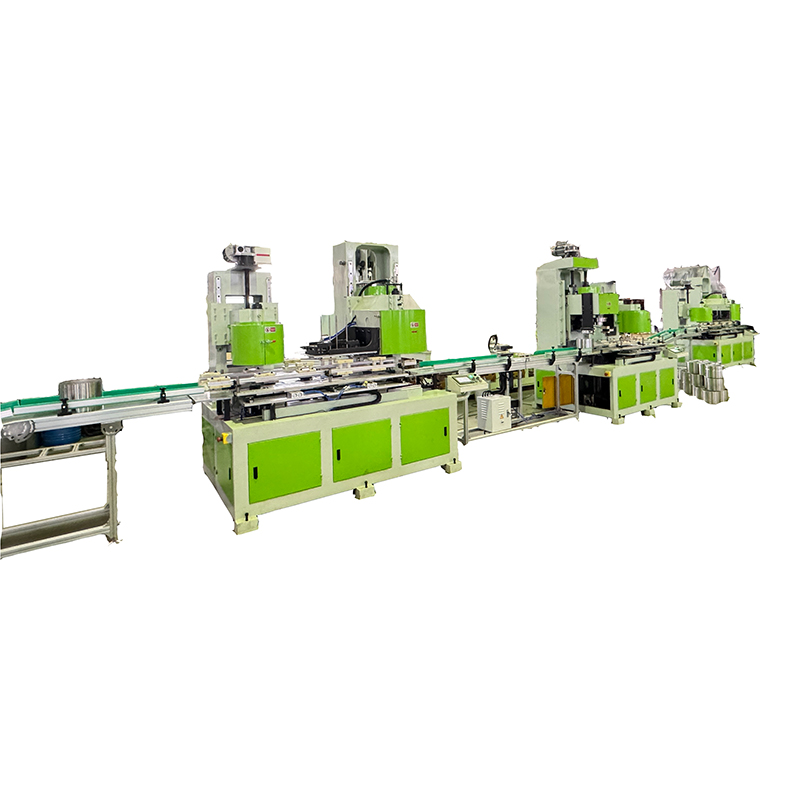

Contact Us