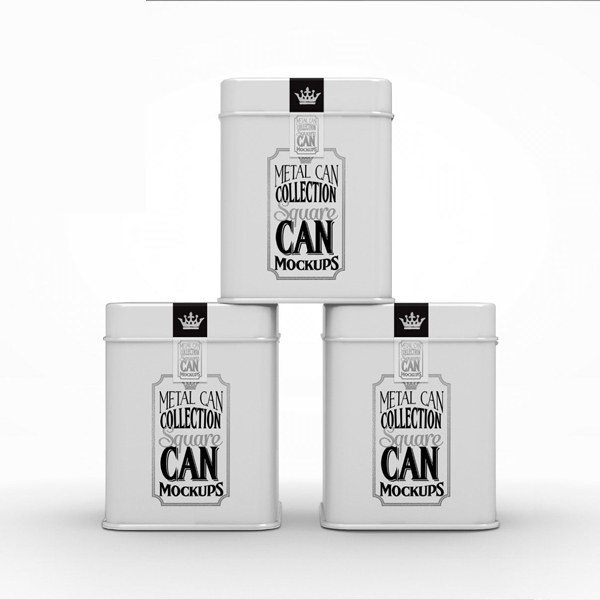
A 1–5L square can production line is a fully automated industrial manufacturing system designed to produce square or rectangular metal cans with capacities ranging from 1 liter to 5 liters. The line integrates a sequence of precision-engineered stations — including sheet feeding, can body forming, welding, interior and exterior coating, drying, expanding, flanging, and seaming — to convert flat tinplate or steel sheet into finished, leak-proof cans ready for filling and labeling. These production lines are widely adopted across the food, beverage, chemical, paint, lubricant, and pharmaceutical industries, where square cans offer superior stacking efficiency, space utilization, and product protection compared with round containers.
Why Square Cans in the 1–5L Range Matter
The 1–5 liter size range is one of the most commercially significant segments in metal can packaging. It covers single-use and multi-use containers for cooking oils, paint and coatings, agrochemicals, adhesives, motor oils, cleaning agents, and specialty food products. Square geometry in this volume range delivers measurable practical advantages over cylindrical cans:
- Stacking efficiency: Square cans stack without gaps, allowing up to 30% more units per pallet compared with round cans of equivalent volume, directly reducing logistics and warehousing costs.
- Shelf space utilization: Flat sides allow cans to be displayed or stored side by side with no wasted space, making them preferred in retail and industrial storage environments.
- Handling and pouring: Square cans with a handle and spout are easier to grip, tilt, and pour precisely — particularly important for viscous products like paints or cooking oils.
- Tamper evidence: Metal square cans with seamed lids and welded seams provide an inherent tamper-evident structure that meets regulatory requirements for food and chemical packaging.
- Printability: Large flat side panels offer excellent surface area for labeling, branding, safety information, and regulatory text, which is critical for chemical and pharmaceutical products.
Core Production Stages of a 1–5L Square Can Line
A complete 1–5L square can production line processes raw tinplate or steel sheet through a continuous, integrated sequence of stations. Each stage is precisely timed and synchronized by a central PLC control system to ensure dimensional accuracy, seam integrity, and surface quality at production speeds that typically reach 30 to 120 cans per minute depending on can size and configuration.
Sheet Feeding and Blanking
Pre-printed or plain tinplate coils or sheets are loaded into an automatic sheet feeder. A blanking press cuts the sheet into precise rectangular blanks sized for the target can body. Blank dimensions are held to tolerances within ±0.1 mm to ensure consistent body forming in subsequent stages. Servo-driven feeders minimize sheet waste by optimizing blank nesting layouts.
Can Body Forming
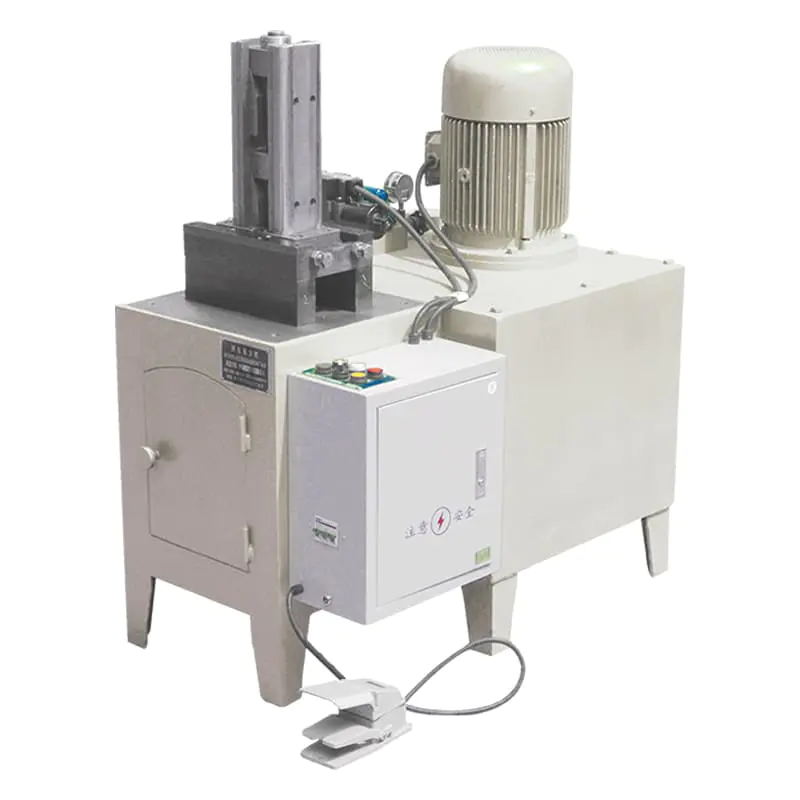
Each blank is fed into a body-forming unit where it is bent and shaped around a mandrel into the square or rectangular can body profile. Corner-forming tooling applies controlled pressure to achieve sharp, consistent 90° corners — a defining quality characteristic of square cans. The overlap seam of the body is prepared for welding in the next stage. Modern forming stations can handle material thicknesses from 0.18 mm to 0.35 mm of tinplate without surface cracking or springback issues.
Side Seam Welding
The body seam is closed by a high-frequency resistance welding or laser welding unit. Resistance welding uses copper wire electrodes and precisely controlled electrical current pulses to fuse the overlapping seam edges. Weld quality is continuously monitored by sensors that detect current, pressure, and temperature deviations in real time. A properly welded side seam achieves leak-proof integrity capable of withstanding internal pressures of up to 0.3 MPa, which is essential for liquid chemicals or carbonated products.
Interior and Exterior Coating
After welding, the can body enters a coating station where the interior weld stripe is coated with an epoxy or polyester-based lacquer to protect both the metal and the product from corrosion and contamination. For food-grade applications, the entire interior surface receives an FDA-compliant coating applied by spray or roller systems. The exterior surface may receive a clear or pigmented protective coat that also serves as a base for printed decoration.
Drying and Curing
Coated can bodies pass through a continuous tunnel oven where infrared or hot-air heating cures the lacquer at temperatures between 180°C and 220°C. Dwell time in the oven is typically 8–15 minutes, controlled by conveyor speed. Proper curing ensures the coating adheres fully, passes cross-cut adhesion tests, and provides the chemical resistance required for the target product — particularly important for solvent-based chemicals, oils, or acidic food products.
Expanding and Shaping
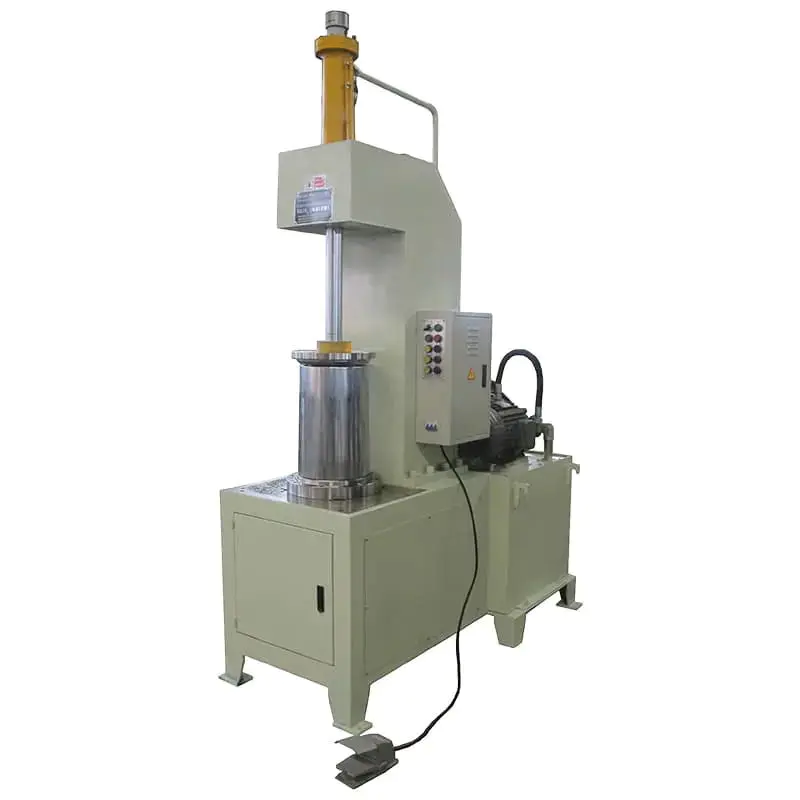
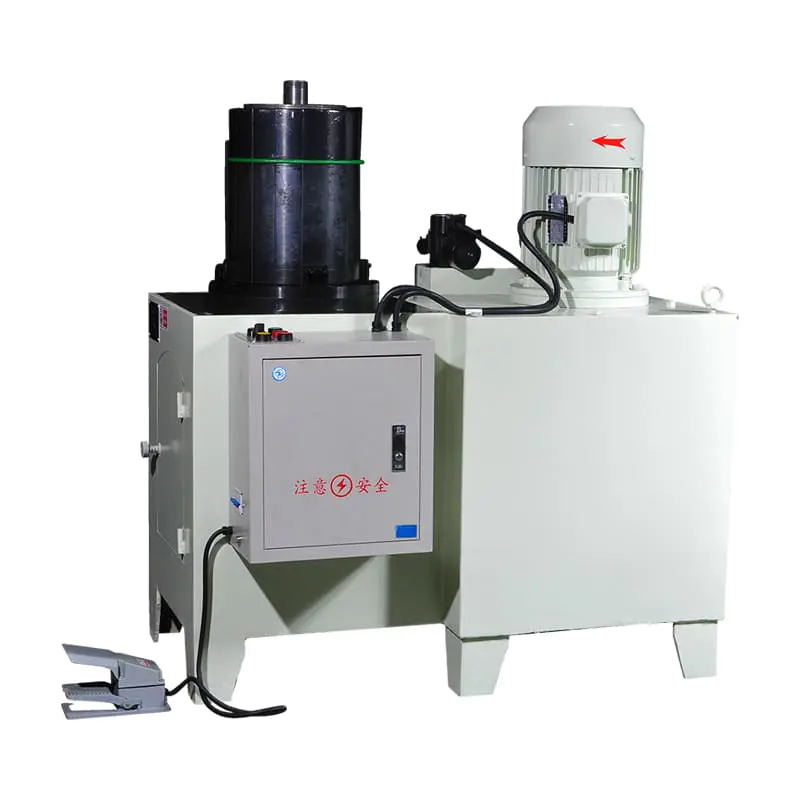
An expanding station uses mechanical tooling or hydraulic dies to bring the formed can body to its precise final dimensions. This compensates for any springback after forming and ensures that every can body is perfectly square with consistent wall flatness. Dimensional consistency at this stage — typically within ±0.2 mm on all faces — is critical for reliable lid seaming and for uniform stacking in palletizing.
Flanging
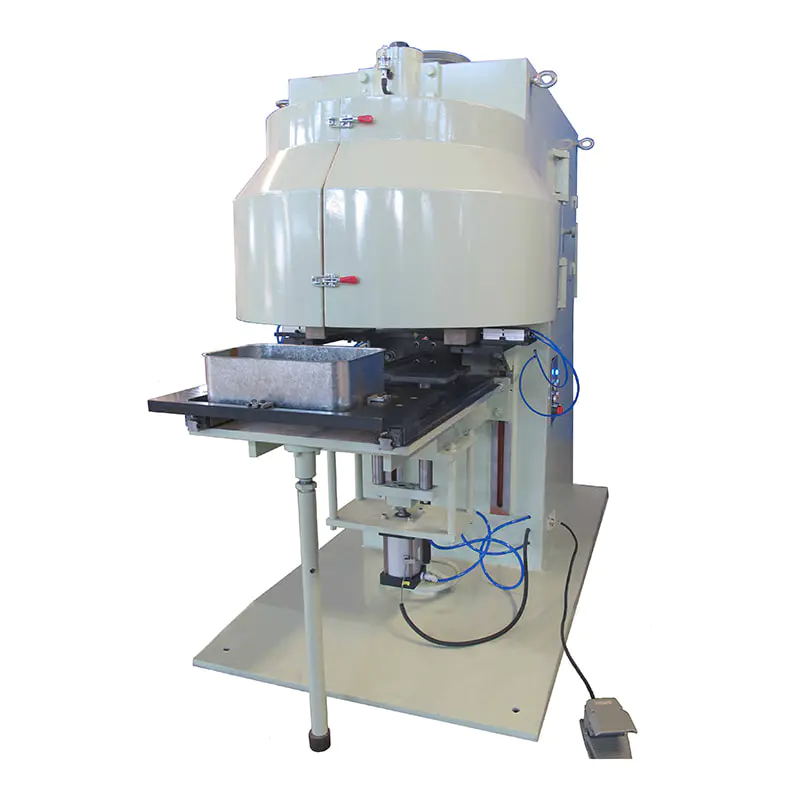
The top and bottom edges of the can body are flanged outward by a flanging machine to create the seaming surface needed to attach the top and bottom lids. Flange width and angle are set to match the seaming tooling profile, ensuring a hermetic double seam. Flanging accuracy directly affects the seam tightness and the overall can height tolerance.
Bottom Seaming
A pre-formed bottom lid is fed automatically and attached to the flanged body using a double-seaming unit. Double seaming interlocks the lid and body flange through a two-operation rolling process, creating a five-layer mechanical lock that is the industry standard for hermetic metal can closures. Seam integrity is verified periodically by teardown inspection measuring seam thickness, seam length, overlap, and tightness rating.
Handle and Accessory Attachment (Optional)
Many 1–5L square cans for paint, oil, or chemical applications require a wire handle, spout, or lug. Automated handle-riveting or spot-welding stations can be integrated inline to attach these accessories at production speed without manual intervention. Handle attachment strength is tested to withstand loads well above the filled can weight — typically a minimum pull strength of 3–5 times the gross weight of the filled container.
Leak Testing and Quality Inspection
Finished can bodies pass through an automated leak-test station that pressurizes each can with compressed air and detects pressure loss by sensor. Non-conforming cans are automatically rejected from the line. Vision inspection systems simultaneously check for body dents, coating defects, seam irregularities, and dimensional deviations, ensuring that only conforming cans proceed to the output conveyor.
Production Line Specifications at a Glance
The following table summarizes the typical technical parameters of a 1–5L square can production line in standard industrial configurations:
| Parameter |
Typical Specification |
Notes |
| Can Volume Range |
1 L – 5 L |
Tooling change required between sizes |
| Production Speed |
30–120 cans/min |
Speed decreases as can size increases |
| Material Thickness |
0.18 – 0.35 mm |
Tinplate or electrolytic chromium-coated steel |
| Welding Method |
High-frequency resistance or laser |
Resistance welding most common for tinplate |
| Curing Oven Temperature |
180 – 220 °C |
Infrared or hot-air tunnel |
| Dimensional Tolerance |
±0.2 mm |
Body width, length, and height after expanding |
| Control System |
PLC + HMI touchscreen |
Recipe management for multi-size production |
| Power Consumption |
15 – 45 kW (excluding oven) |
Oven adds 20–60 kW depending on capacity |
Table 1: Typical technical parameters of a 1–5L square can production line
Industries and Applications Served
The versatility of the 1–5L square can format means that a single production line can serve multiple industries depending on the coating specification, lid design, and accessory configuration applied. The table below outlines the primary sectors and their specific requirements:
| Industry |
Typical Products |
Key Can Requirements |
| Food & Edible Oil |
Cooking oil, ghee, syrup, seasoning |
FDA-grade interior coating, anti-corrosion |
| Paint & Coatings |
Wall paint, primer, varnish, wood stain |
Handle, pry-off or lever lid, solvent resistance |
| Chemical & Agrochemical |
Pesticides, herbicides, industrial solvents |
Chemical-resistant lining, child-resistant closure |
| Lubricants & Automotive |
Engine oil, gear oil, brake fluid |
Handle, screw-top or plug lid, oil-resistant interior |
| Pharmaceutical |
Disinfectants, alcohol solutions, medical solvents |
Hermetic seal, low extractable coating, GMP compliance |
| Beverage & Specialty Food |
Honey, coffee, tea, confectionery |
Decorative exterior printing, easy-open lid |
Table 2: Industries served by 1–5L square can production lines and their specific packaging requirements
Automation and Control: How Modern Lines Achieve Consistency
The productivity and quality advantages of a modern 1–5L square can production line stem directly from its automation architecture. A central PLC (Programmable Logic Controller) coordinates every station on the line — sheet feeder timing, forming press strokes, welder current pulses, oven belt speed, expanding die positions, flanging depth, and seaming roller pressure — in synchronized real time.
Operators interact with the system through an HMI touchscreen that displays live production data, alarm logs, and stored recipes for each can size. Switching the line from 1L to 4L production, for example, involves loading the corresponding recipe (which sets all servo positions, speeds, and process parameters automatically) and performing the physical tooling change — a process that experienced operators can complete in under 45–90 minutes on well-designed lines.
Additional automation features commonly found on high-specification lines include:
- Automatic sheet registration: Vision or sensor systems verify correct sheet positioning before each forming stroke, preventing misaligned blanks that would cause defective bodies.
- Weld monitor systems: Real-time weld quality sensors detect insufficient or excessive weld energy and trigger automatic rejection of affected cans without stopping the line.
- Automatic lubrication: Centralized lubrication systems service bearings and guide rails on a timed cycle, reducing manual maintenance intervals and extending component life.
- OEE monitoring: Overall Equipment Effectiveness dashboards track uptime, output rate, and quality yield in real time, enabling production managers to identify and address bottlenecks quickly.
- Remote diagnostics: Ethernet or industrial IoT connectivity allows equipment engineers to monitor alarms, adjust parameters, and perform software diagnostics remotely — minimizing troubleshooting downtime.
Key Advantages of a Dedicated Square Can Production Line
Investing in a purpose-built 1–5L square can production line — rather than using manual or semi-automatic methods — delivers measurable operational advantages:
High Production Efficiency
Automated lines running at 60 cans per minute produce 3,600 cans per hour or approximately 86,400 cans in a 24-hour shift. Manual or semi-automatic operations producing the same can size typically achieve 10–20% of this output, making full automation essential for any operation targeting meaningful market volume.
Low Energy Consumption Per Unit
Modern servo-driven forming and welding stations use energy only during active work cycles, unlike older pneumatic systems that maintain constant compressed air pressure. Energy recovery systems on some lines capture braking energy from servo motors and return it to the bus. This reduces energy cost per 1,000 cans produced by 20–35% compared with older-generation equipment.
Stable and Repeatable Production Quality
PLC-controlled process parameters eliminate the variability introduced by manual adjustment. Once a recipe is validated, every can produced follows the same forming forces, welding energy, curing profile, and seaming pressure — delivering batch-to-batch consistency that manual operations cannot match. This is especially critical for export customers or certified supply chains that require documented process controls.
Simple Operation and Reduced Labor Requirements
A fully automated 1–5L square can line typically requires 2–4 operators per shift — one for sheet loading and line oversight, one for quality inspection and reject management, and one or two for packaging and pallet building — regardless of output rate. Manual production of the same volume would require 15–25 workers performing repetitive forming and seaming tasks.
Flexible Multi-Size Capability
A single production line covering the 1–5L range can serve multiple customer segments and product categories using shared infrastructure. Modular tooling sets for each can size allow manufacturers to switch production in response to seasonal demand, customer orders, or new product launches without investing in separate dedicated lines for each size.
Customization Options for Specific Can Designs
Standard 1–5L square can lines can be configured with additional process modules to produce specialized can designs demanded by different markets. Common customization options include:
- Spout/nozzle insertion station: Integrates an automatic spout-press or nozzle-welding unit for cans requiring a built-in pouring outlet, common in paint and oil packaging.
- Necking station: Reduces the can body diameter at the top opening to accept a smaller-diameter lid, improving material efficiency and enabling standard lid sizes across multiple body volumes.
- Embossing unit: Presses raised lettering, logos, or structural ribs into the can body for branding, reinforcement, or anti-counterfeit purposes.
- Beading station: Rolls horizontal ribs (beads) into the can sidewall to increase vertical compressive strength, allowing higher stacking loads without body buckling.
- UV or digital printing integration: Inline digital printing heads or UV offset print stations apply full-color graphics directly to the can body, eliminating the need for separate paper labels on premium consumer products.
- Special lid formats: Lever-ring lids, screw caps, plug lids, and ring-pull easy-open ends can each be fed by dedicated lid feeders matched to the base seaming unit.
Material Selection: Tinplate and Its Role in Can Performance
The raw material used in square can production is primarily tinplate — low-carbon steel electroplated with a thin layer of tin (typically 2.8–11.2 g/m² per side, designated as T1 to T5 temper grades). The choice of tin coating weight and temper directly affects can performance:
- Corrosion resistance: Higher tin coating weights (T4–T5) provide superior protection for aggressive contents such as acidic foods or chlorine-based chemicals, extending shelf life without additional lacquer.
- Formability: Softer tempers (T1–T2) are easier to form into sharp-cornered square profiles without cracking, which is critical for small 1L cans with tight corner radii.
- Weldability: Electrolytic chromium-coated steel (ECCS, also called TFS — tin-free steel) is an alternative material used where direct tin contact with the product is regulated, welded using adjusted weld parameters.
- Recyclability: Steel tinplate is 100% recyclable and retains its value in scrap markets, making square metal cans an environmentally preferable choice over plastics for many product categories.
Choosing a 1–5L Square Can Production Line: What to Evaluate
Selecting the right production line is a significant capital decision. The following factors should be assessed carefully before committing to a specific configuration:
- Target output volume: Define your required cans per shift and match this to a line speed specification with a realistic efficiency factor (typically 75–85% for modern automated lines accounting for planned stops and changeovers).
- Size range and changeover frequency: If you produce many different sizes regularly, invest in quick-change tooling systems and recipe-driven automation to minimize changeover downtime.
- Product compatibility: Confirm that the coating system and interior lacquer formulations are certified and validated for your specific product chemistry — especially for food, pharmaceutical, or reactive chemical contents.
- Welding technology: High-frequency resistance welding is the most cost-effective standard for tinplate; laser welding offers cleaner seams and is preferred for premium or very thin-wall applications but requires higher capital and maintenance investment.
- After-sales support and spare parts availability: A production line is only as good as its uptime. Verify that the manufacturer offers commissioning support, operator training, remote diagnostics, and reliable spare parts supply — preferably with documented lead times for critical components.
- Compliance and certifications: For food and pharmaceutical applications, ensure the line and its coatings comply with applicable standards (FDA, EU Regulation 10/2011, GB standards in China, or others relevant to your export markets).
Manufacturers specializing in square can production line engineering — such as LK MACHINERY CO., LTD., located in Zhoushan City, Zhejiang Province, China, with access to major East China Sea shipping routes via the Yongzhou Cross-sea Expressway — combine production expertise with logistical capability to support international buyers across Asia, Europe, and the Americas. Evaluating a supplier's track record with installed lines in your industry segment, along with their engineering customization capability, is the most reliable basis for a confident purchasing decision.
Summary: Is a 1–5L Square Can Production Line the Right Investment?
For any manufacturer producing metal packaging in the 1–5L range at meaningful volume, a dedicated automated production line is the clear answer. The combination of high throughput (up to 120 cans/minute), low per-unit energy consumption, minimal labor requirements, and consistent quality across millions of cans per year makes manual or semi-automatic production economically uncompetitive above relatively modest volumes.
The ability to serve food, chemical, paint, lubricant, and pharmaceutical markets from a single line — by adjusting coatings, lids, and accessories — gives square can producers exceptional flexibility to capture demand across multiple sectors. As sustainability requirements increasingly favor recyclable metal packaging over single-use plastics, investment in high-quality square can manufacturing capacity positions producers well for both current demand and long-term market growth.


 +86 13666712509

 English
 русский
 عربى
عربى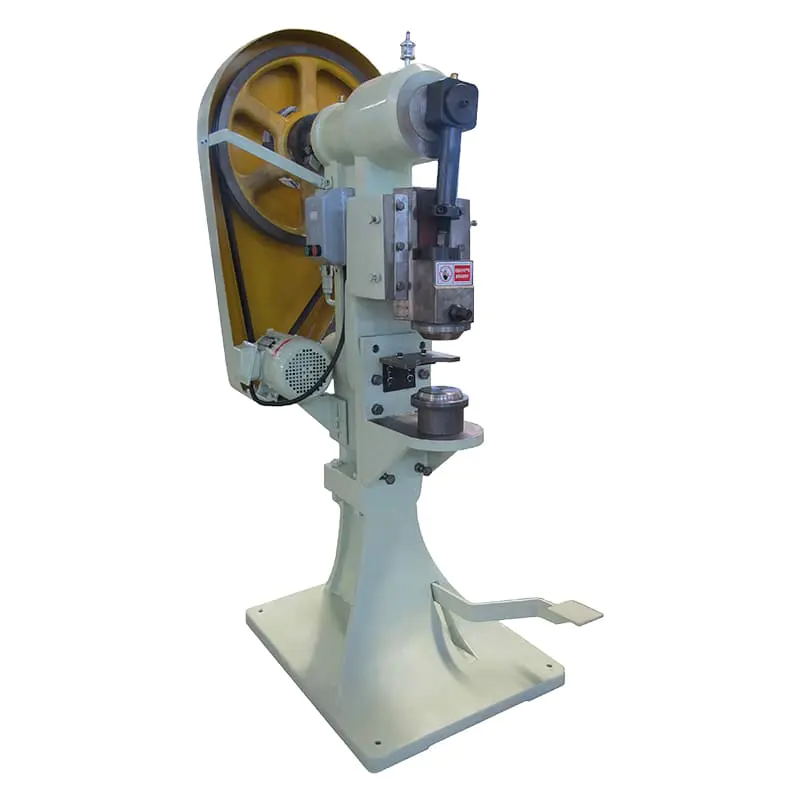



Contact Us