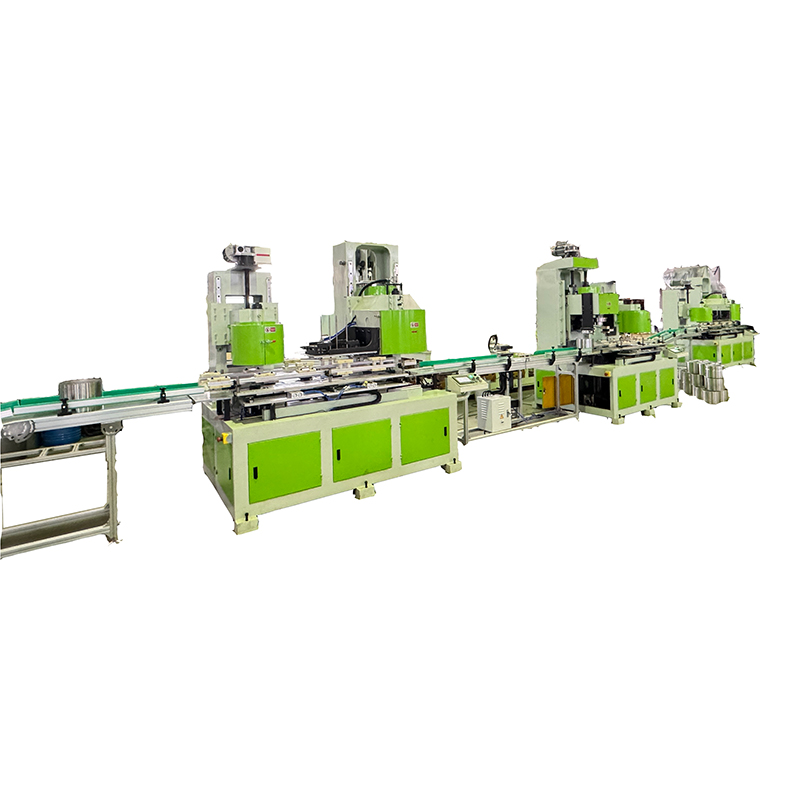
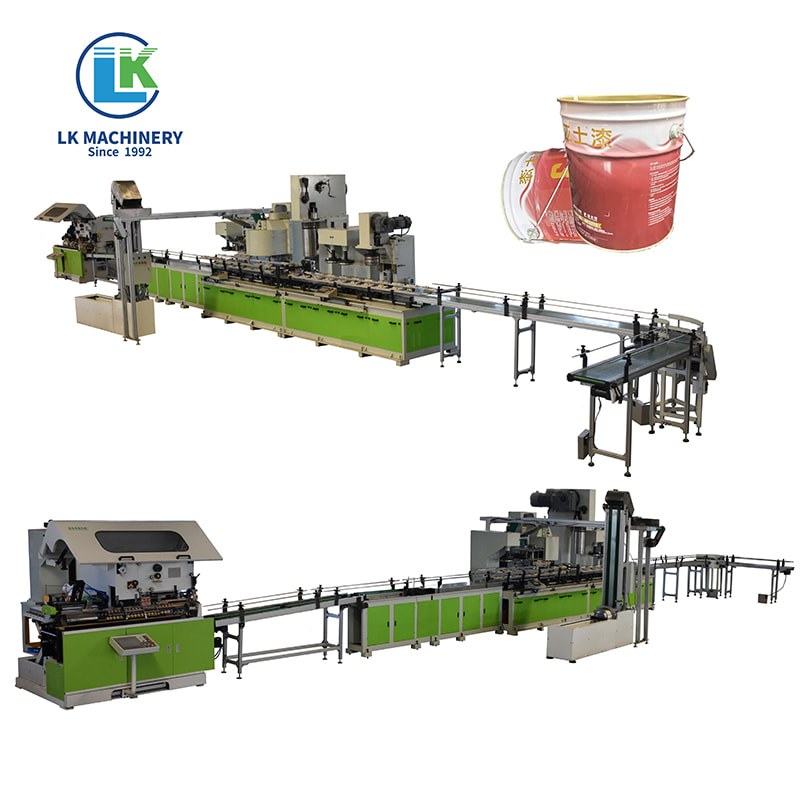
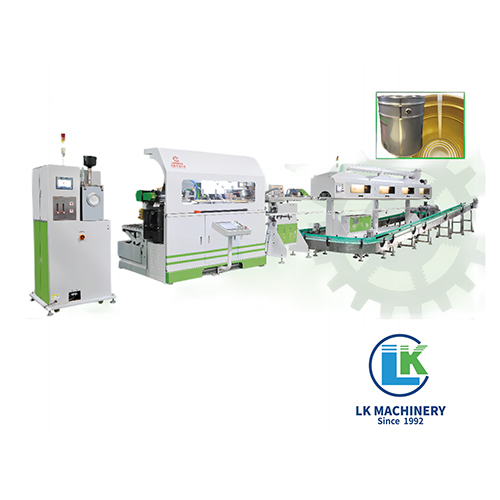
A 1-5L round can production line is a fully automated industrial system that transforms flat metal sheets into finished, sealed round cans through a continuous sequence of forming, welding, coating, drying, expanding, and seaming processes. From raw material feeding to the final product, the entire workflow is handled by integrated machinery with minimal human intervention — delivering consistent quality, high output, and low energy consumption across industries such as food, beverage, chemical, and pharmaceutical packaging.
Understanding how each stage of this production line works helps manufacturers optimize operations, reduce waste, and select the right equipment for their specific packaging needs.
Overview of the 1-5L Round Can Production Line
The 1-5L round can production line is designed to manufacture cylindrical metal cans with capacities ranging from 1 liter to 5 liters. These cans are commonly used for packaging engine oils, paints, coatings, food products, and chemical substances. The production line integrates multiple automated workstations that operate in sequence, ensuring each can passes through every required process before it reaches the end of the line as a finished product ready for filling.
Key characteristics of a standard 1-5L round can production line include:
- Production speed: typically 20 to 60 cans per minute, depending on the model and can size
- Applicable materials: tinplate, electrolytic tinplate (ETP), and tin-free steel (TFS)
- Can diameter range: typically 99mm to 153mm
- Automation level: fully automatic with PLC (Programmable Logic Controller) control systems
- Defect rate: less than 0.5% with high-precision welding and detection modules
The line is modular in design, meaning individual stations can be added, removed, or reconfigured to accommodate different can sizes, materials, and production volumes.
Stage 1 — Automatic Feeding System
The production process begins with the automatic feeding system, which supplies pre-cut or coil-fed metal sheets to the line. This station uses servo motors and pneumatic arms to precisely position each sheet before it enters the forming station. The feeding system can typically handle sheet thicknesses between 0.18mm and 0.35mm, and it is designed to minimize sheet misalignment, which is one of the most common causes of downstream defects.
Modern feeding systems incorporate sensors that detect sheet absence, double-feeding, or skewing. When an abnormality is detected, the system automatically stops or reroutes the defective sheet, preventing damage to the forming tools.
Stage 2 — Can Body Forming
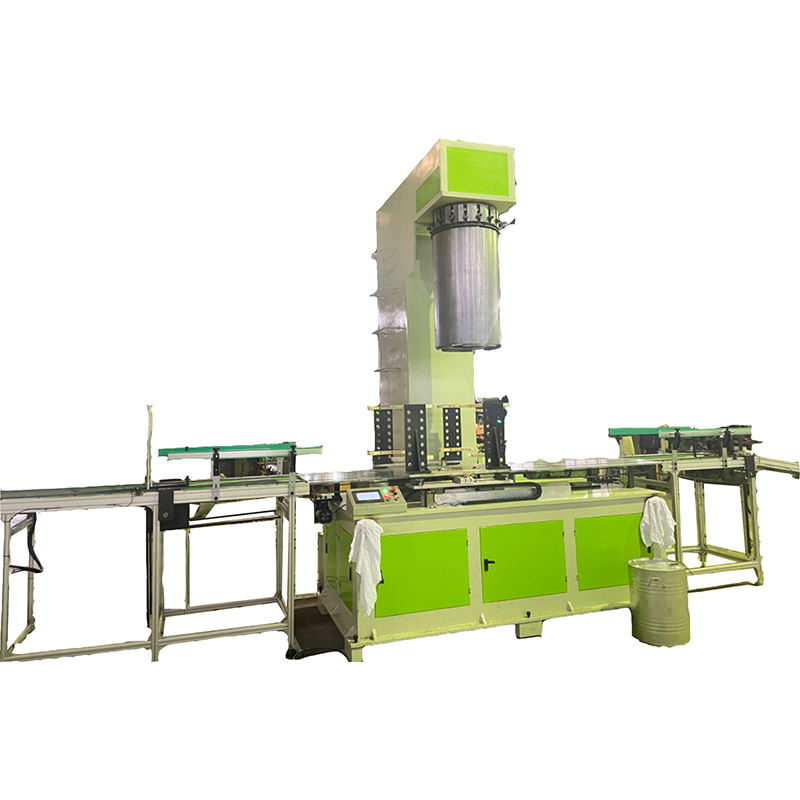
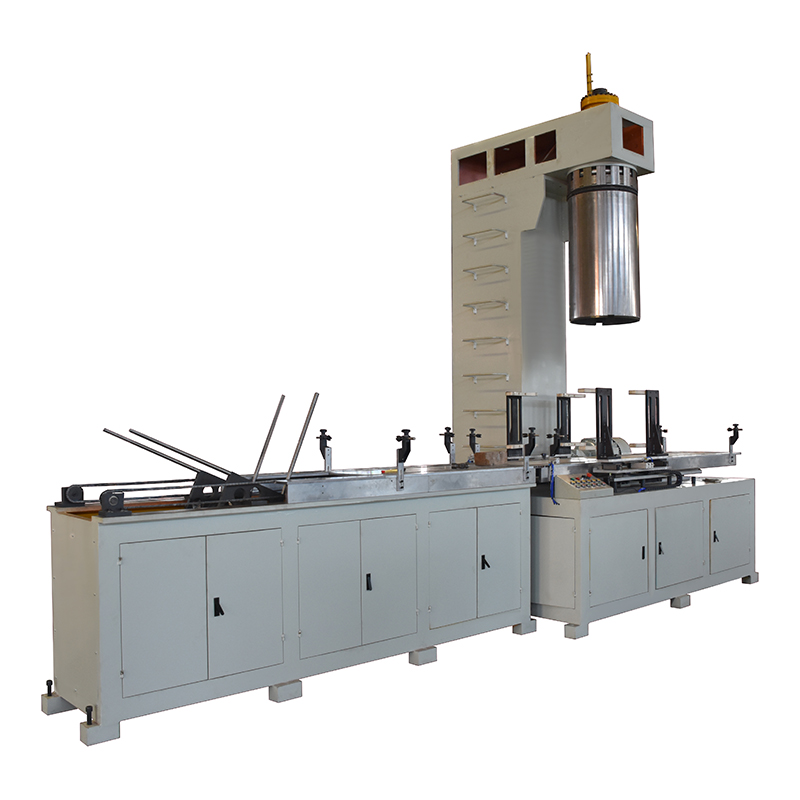
Once fed into the line, each flat metal sheet is shaped into a cylindrical can body by the forming station. This process involves bending and rolling the sheet around a mandrel (a cylindrical form) until the two edges meet precisely. The forming station uses hardened steel rollers and guides to ensure the can body maintains a consistent diameter and roundness throughout the run.
The precision of this stage directly affects weld quality in the next step. Gaps or misalignments as small as 0.1mm can lead to weak welds or leaks in the finished can. High-end production lines use CNC-controlled forming mechanisms that self-adjust based on real-time measurements.
Stage 3 — Side Seam Welding
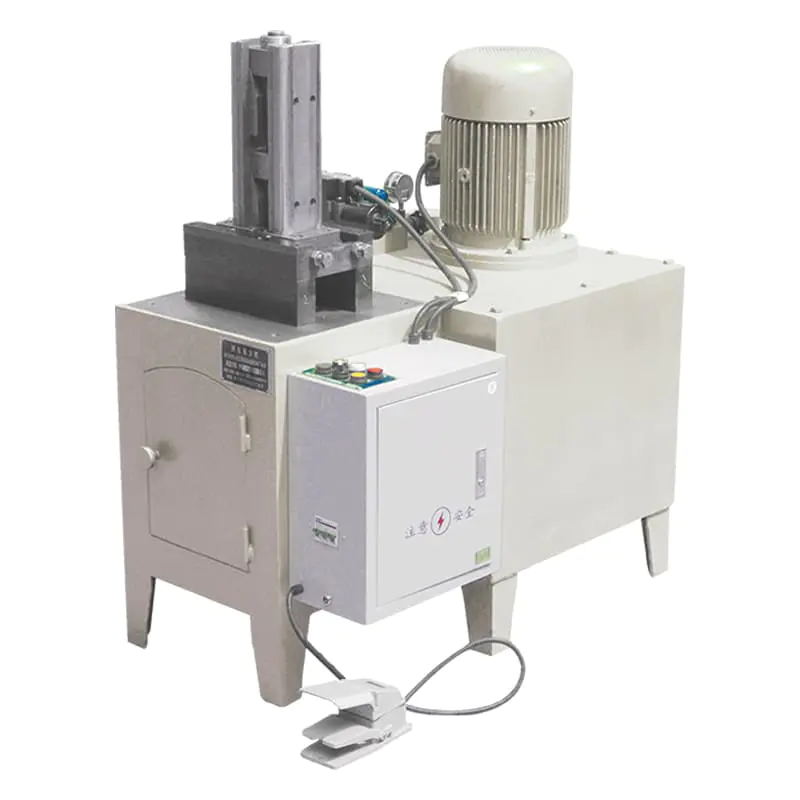
Side seam welding is one of the most critical stages in round can manufacturing. After the body is formed, the two overlapping edges of the metal sheet are welded together using a high-frequency resistance welding process. This involves passing a high-frequency electric current through the seam while applying pressure via copper wire electrodes, which creates a continuous, airtight, and liquid-tight weld at speeds that match the production line rate.
Key welding parameters that are precisely controlled include:
- Welding current: typically between 1,000 and 2,000 amperes
- Welding speed: 20–80 meters per minute depending on material
- Overlap width: approximately 0.4–0.8mm for standard tinplate
- Electrode wire feed rate: synchronized with welding speed for consistent contact
After welding, the seam is inspected by an online detection system that checks for porosity, cracks, or incomplete fusion. Defective cans are automatically rejected before moving to the next stage.
Stage 4 — Internal and External Coating (Stripe Coating)
Welding exposes bare metal at the seam area, which must be protected against corrosion and contamination. This is accomplished through stripe coating, where a thin layer of protective coating material (typically epoxy resin or polyester-based lacquer) is applied to both the internal and external sides of the weld seam.
The coating is applied using precision spray nozzles or roller applicators immediately after welding, while the seam is still slightly warm to promote adhesion. The coat thickness is typically 5 to 15 microns. For food-grade cans, internal coatings must comply with food safety standards such as FDA 21 CFR or EU Regulation 10/2011 to ensure no migration of harmful substances into the contents.
Stage 5 — Drying and Curing
After coating, the can bodies pass through a drying oven to cure the applied coating. The oven uses infrared radiation or forced hot air at temperatures typically ranging from 180°C to 220°C. The dwell time inside the oven — usually 5 to 15 seconds at full production speed — is carefully calculated to ensure the coating fully crosslinks without overheating the metal.
Proper curing is essential: under-cured coatings may peel or crack during downstream processing, while over-cured coatings can become brittle and lose adhesion. Inline temperature monitoring systems ensure the oven maintains consistent heat distribution across all cans passing through it simultaneously.
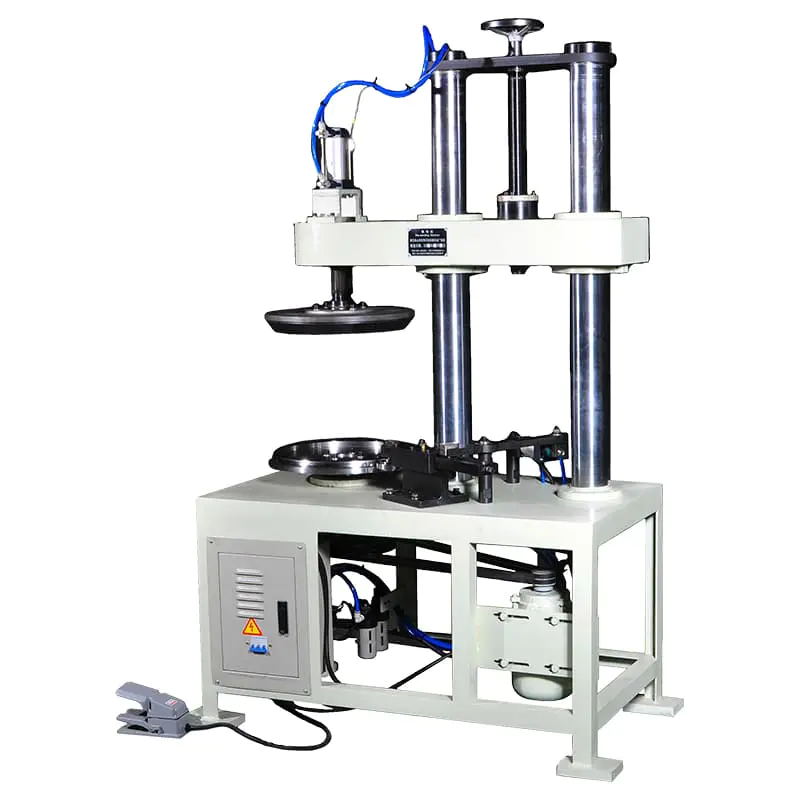
Stage 6 — Flanging and Expanding
The flanging process rolls the open ends of the can body outward to create a flange — a small lip that will be used to attach the top and bottom lids during seaming. Flanging must be uniform around the entire circumference of the can to ensure a tight, leak-proof seam.
Following flanging, many production lines include an expanding (or beading/necking) step. Expanding slightly increases the diameter at the can body midsection to add structural rigidity, while necking reduces the diameter near the ends to create a tapered profile. These features help the finished can resist deformation under stacking loads of up to 200–400 kg in warehousing environments.
Stage 7 — Bottom Seaming
Double seaming is the process by which the bottom lid is permanently attached to the can body. A pre-formed round lid is placed over the flanged bottom end of the can body and then crimped together using a seaming chuck and seaming rolls. This creates a hermetic, multi-layer interlock — the standard double seam — that prevents leaks even under significant internal pressure.
A seaming compound (sealant) is applied to the inner lip of the lid before seaming. This compound fills any microscopic gaps in the seam and cures to form an airtight seal. For round cans designed to hold pressure (such as aerosol-type products), the seam must withstand internal pressures of 3–6 bar without failure.
After bottom seaming, the can body is structurally complete and ready for filling. The top lid is typically seamed after filling by the end-user's filling line.
Key Process Parameters Comparison
| Production Stage |
Key Parameter |
Typical Range |
Impact on Quality |
| Feeding |
Sheet thickness |
0.18–0.35 mm |
Forming accuracy, weld strength |
| Welding |
Welding current |
1,000–2,000 A |
Seam integrity, leak resistance |
| Stripe Coating |
Coat thickness |
5–15 microns |
Corrosion protection, food safety |
| Drying |
Oven temperature |
180–220°C |
Coating adhesion, cure completeness |
| Seaming |
Seam pressure resistance |
3–6 bar |
Hermetic seal, product shelf life |
Table 1: Typical operating parameters for each stage of a 1-5L round can production line
PLC Control and Automation Intelligence
Modern 1-5L round can production lines are managed by PLC (Programmable Logic Controller) systems that coordinate all stations in real time. The PLC monitors and adjusts hundreds of variables simultaneously — motor speeds, welding parameters, oven temperatures, seaming pressures — and can alert operators to anomalies within milliseconds.
Many advanced lines also integrate:
- HMI (Human-Machine Interface) touchscreens for easy operator control and diagnostics
- Online vision inspection systems that use cameras to detect surface defects, printing errors, or seam anomalies at full production speed
- Automatic rejection conveyors that divert defective cans without stopping the line
- Data logging and reporting modules that record production metrics for quality traceability and process optimization
This level of automation typically reduces the required labor force to just 2–4 operators per shift for a full production line, compared to 10–15 workers required by semi-automated or manual lines.
Customization Options Available on Round Can Lines
One of the major advantages of modern 1-5L round can production lines is their high degree of customizability. Manufacturers can configure the line to meet specific product, regulatory, or market requirements. Common customization options include:
Handle or Bail Attachment
For cans in the 3–5L range, a wire bail handle attachment station can be integrated into the line. This station automatically feeds, forms, and attaches metal wire handles to the can body, enabling easy carrying of larger, heavier filled cans used in paint, chemical, and lubricant industries.
Printing and Labeling Integration
Inline printing stations using offset or digital printing technology can apply product branding, regulatory information, barcodes, and batch codes directly onto the can body surface before or after forming. This eliminates the need for separate labeling processes and improves traceability.
Embossing and Beading
Embossing rollers can create decorative or structural patterns on the can body surface. Beading — the creation of horizontal ribs around the can circumference — adds rigidity and allows the can to withstand additional stacking weight without deformation, which is particularly important for warehousing and transportation.
Lid and Plug Hole Options
For paint and chemical cans, the top lid can be fitted with a plug hole or lever lid mechanism on the production line. This allows dispensing of contents without fully removing the lid, meeting industry-specific functional requirements.
Industries and Applications Served
The 1-5L round can production line serves a broad range of industries. The flexibility of the line in terms of can size, material, and finish makes it applicable across multiple sectors:
| Industry |
Typical Can Size |
Common Contents |
Special Requirements |
| Food & Beverage |
1–3L |
Cooking oil, syrup, beverages |
Food-grade internal coating |
| Chemical |
1–5L |
Solvents, adhesives, cleaners |
Chemical-resistant lining |
| Paints & Coatings |
1–5L |
Wall paint, varnish, primers |
Lever lid, wire handle |
| Lubricants & Oil |
1–5L |
Engine oil, gear oil, grease |
Pressure-tight seam |
| Pharmaceutical |
1–2L |
Antiseptics, liquid medicines |
Sterile-grade interior coating |
Table 2: Industry applications and specific requirements for 1-5L round metal cans
Advantages of Fully Automated Round Can Production Lines
Investing in a fully automated 1-5L round can production line offers measurable advantages over manual or semi-automatic alternatives:
- Higher throughput: Automated lines can produce 20–60 cans per minute continuously, far exceeding the 5–10 cans per minute typical of semi-automatic setups.
- Consistent quality: PLC-controlled parameters eliminate human variability, resulting in defect rates below 0.5% compared to 2–5% for manual operations.
- Lower labor costs: A full production line requires only 2–4 operators, reducing labor cost per unit by up to 70% compared to manual lines.
- Energy efficiency: Servo-driven systems and optimized oven designs reduce energy consumption per can by 25–40% compared to older hydraulic or pneumatic-dominant systems.
- Rapid size changeover: Quick-change tooling systems allow production lines to switch between different can diameters or heights in 30–60 minutes, minimizing downtime between production runs.
- Scalability: Modular design allows manufacturers to expand capacity by adding stations or parallel lines as demand grows.
What to Consider When Choosing a Round Can Production Line
Selecting the right production line requires evaluating several technical and operational factors:
Production Volume Requirements
Determine the required output per shift or per day. A facility producing 50,000 cans per day will need a line capable of sustained output at 35–40 cans per minute over a standard 8-hour shift, with sufficient buffer for maintenance stops and changeovers.
Can Size Range and Versatility
If your product portfolio includes multiple can sizes (for example, both 1L and 4L cans), choose a line with a wide adjustable range and fast changeover tooling. Single-size dedicated lines offer higher speeds but less flexibility.
Material Compatibility
Ensure the line is tested and rated for the specific tinplate or TFS specifications you plan to use. Thicker materials require higher forming forces and welding power. Coated or pre-printed materials may require gentler feeding and forming systems to avoid surface damage.
After-Sales Support and Spare Parts Availability
Downtime on a production line is costly. When evaluating suppliers, assess their service response time, availability of critical spare parts (electrodes, seaming rolls, forming tools), and whether remote diagnostics and technical support are available.
LK Machinery: A Trusted Manufacturer of Metal Can Production Lines
LK Machinery Co., Ltd. is a well-established name in the metal packaging equipment industry, recognized for its integrated approach combining industrial manufacturing, trade expertise, and continuous technological development. The company specializes in the design and production of metal packaging equipment — including 1-5L round can production lines — as well as molding machine systems.
LK Machinery places strong emphasis on product quality and actively incorporates customer feedback into its engineering and design processes. Its equipment is exported to multiple countries including Russia, the United Arab Emirates, Saudi Arabia, Morocco, Uzbekistan, Kazakhstan, India, and Indonesia, serving clients across diverse industries and regulatory environments.
The company has received several government innovation awards and holds a national patent, reflecting its commitment to developing advanced, proprietary solutions rather than relying on conventional off-the-shelf components. For manufacturers seeking a reliable, technically capable, and internationally experienced partner for round can production line equipment, LK Machinery represents a proven choice.
Maintenance Best Practices for Long-Term Line Performance
Maintaining a 1-5L round can production line properly is essential for maximizing uptime and preserving product quality over the long term. A structured preventive maintenance program should include:
- Daily checks: Inspect electrode wire condition, check lubrication levels, verify sensor function, and visually inspect welded seams from the first cans of each shift.
- Weekly maintenance: Clean forming tools and guides, check and calibrate oven temperature sensors, inspect seaming rolls for wear, and verify PLC alarm logs for recurring faults.
- Monthly overhaul: Replace electrode wires, inspect welding transformer insulation, re-calibrate forming tolerances, and perform a full seam cross-section analysis to verify seam dimensions.
- Annual service: Complete overhaul of all drive systems, replacement of worn forming mandrels and tooling, firmware updates for PLC and HMI systems, and a full safety inspection.
Following a consistent maintenance schedule can extend the operational lifespan of a production line to 15–20 years while maintaining output quality and minimizing the risk of unexpected breakdowns.
Conclusion
A 1-5L round can production line works by integrating a series of precisely coordinated automated stations — feeding, forming, welding, coating, drying, flanging, expanding, and seaming — into a single continuous flow that transforms raw metal sheets into finished, hermetically sealed cans. Each stage is controlled by sophisticated PLC systems and monitored by inline inspection technology to ensure consistent, high-quality output at rates up to 60 cans per minute.
The production line's modular architecture supports extensive customization, making it adaptable to food, chemical, lubricant, paint, and pharmaceutical packaging requirements worldwide. With the right equipment partner and a well-maintained line, manufacturers can achieve low defect rates, high energy efficiency, and low per-unit labor costs that provide a strong competitive foundation in the metal packaging market.


 +86 13666712509

 English
 русский
 عربى
عربى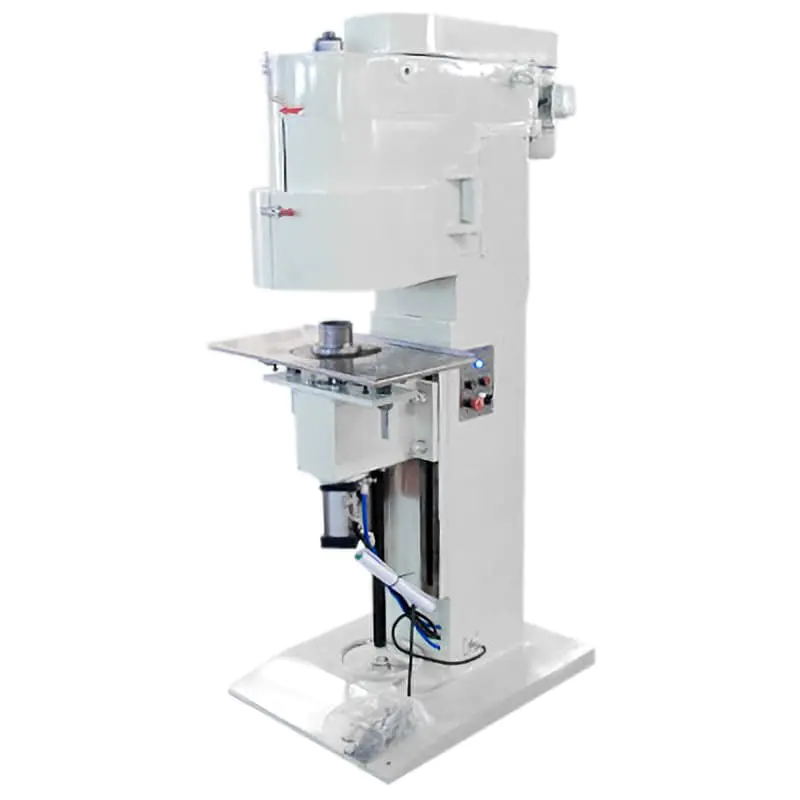

Contact Us