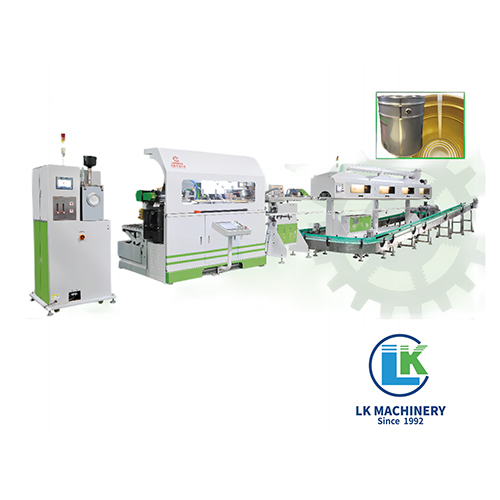
A 200L drum production line is an automated manufacturing system designed to produce 200-liter (55-gallon) steel drums continuously from flat coil stock to finished, tested product — integrating all fabrication stages including sheet metal forming, body welding, beading, head pressing, seaming, coating, drying, expansion, leak testing, and packaging into a single automated workflow. These lines eliminate manual handling between stages and enable production rates of 200 to 600 drums per hour depending on configuration, with consistent quality and dimensional accuracy across every drum produced.
The 200-liter drum is the global standard industrial bulk container — universally compatible with drum handling equipment, palletization systems, and transport regulations — making the 200L drum line one of the most commercially important production systems in the industrial packaging sector.
Complete Production Sequence of a 200L Drum Line
Raw Material Feeding
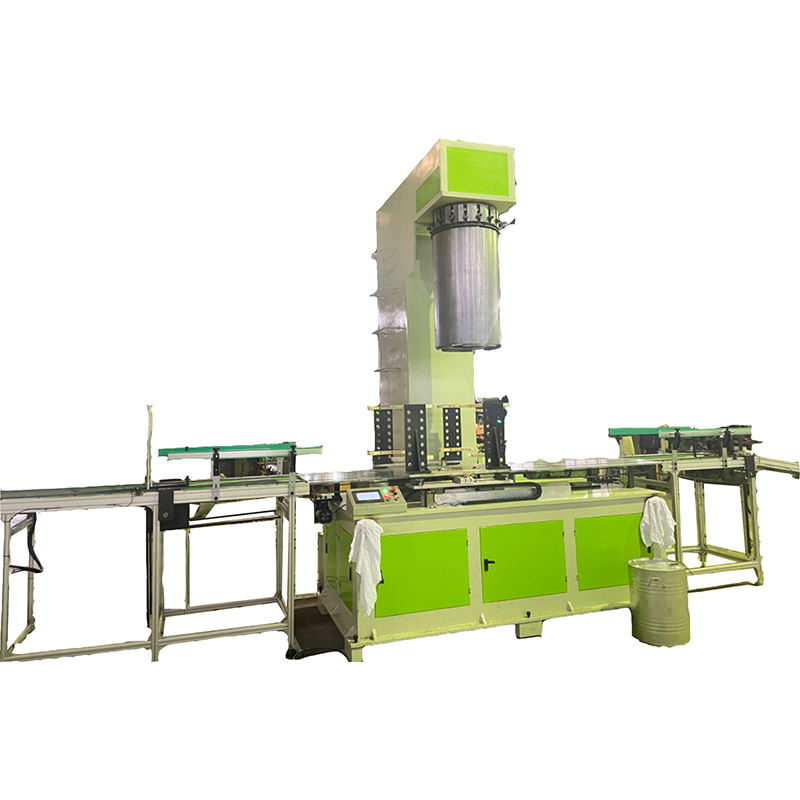
Cold-rolled steel coil — typically 0.8 to 1.2 mm thick for standard drums, up to 1.5 mm for heavy-duty or UN-certified grades — is loaded onto a decoiler and fed through a straightening and blanking station that cuts the coil to precise blank dimensions. The blank width and length determine the cylinder body's final diameter and height, so dimensional accuracy at this stage is fundamental to all subsequent processes.
Body Forming and Welding
The flat blank is formed into a cylinder by the body-making machine. The overlapping longitudinal seam is joined by resistance seam welding — an electric current passed through copper wheel electrodes creates a continuous, hermetically sealed weld along the full height of the body. Weld quality is monitored inline by voltage and current sensors; deviations outside set tolerances trigger automatic rejection of the affected drum body.
Beading
Rolling beads (circumferential ribs) are pressed into the drum body by beading rollers. Standard 200L drums carry 3 to 5 beads spaced along the body height — these significantly increase hoop strength and crush resistance of the thin-walled cylinder, and provide grip points for drum handling equipment. Bead position and depth are controlled to meet relevant standards such as UN packaging specifications.
Head Pressing and Seaming
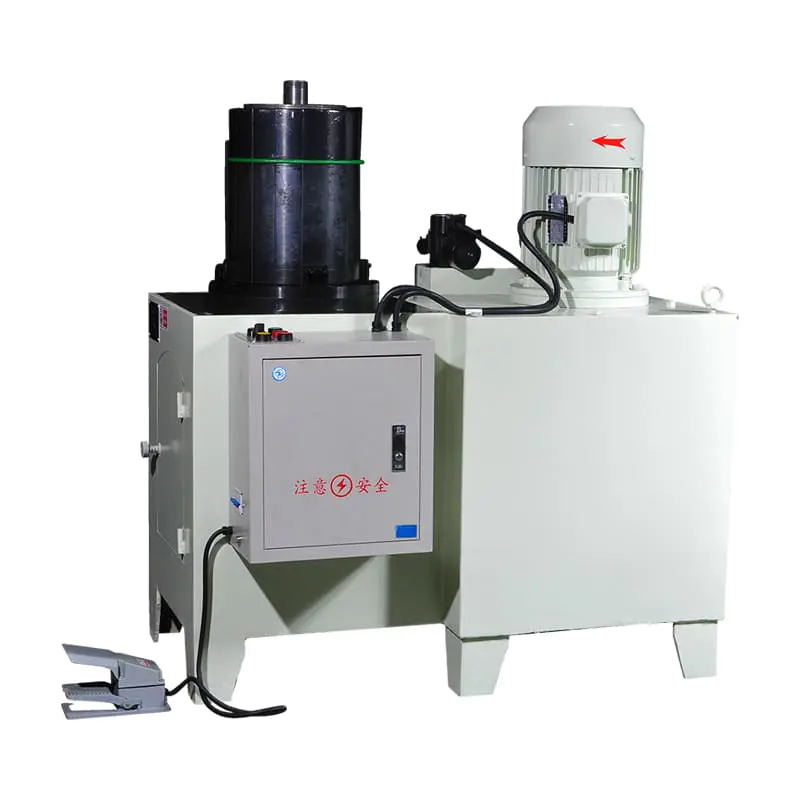
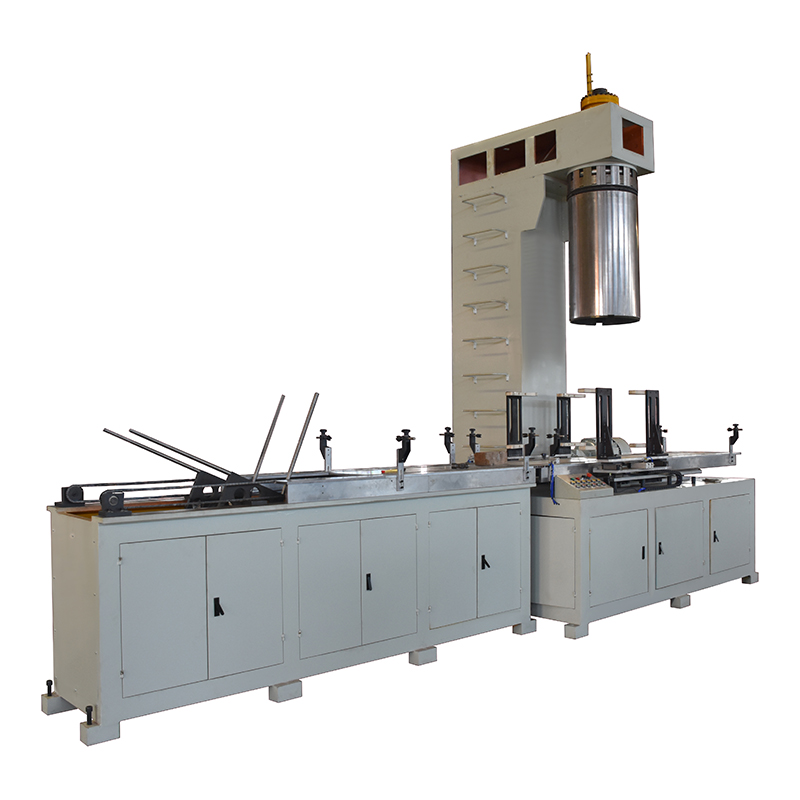
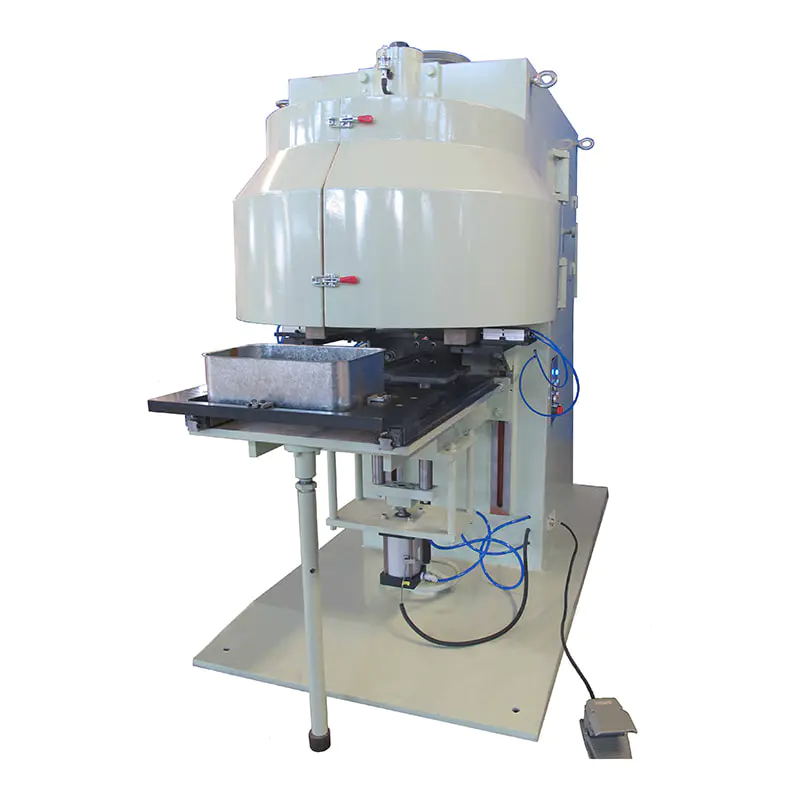
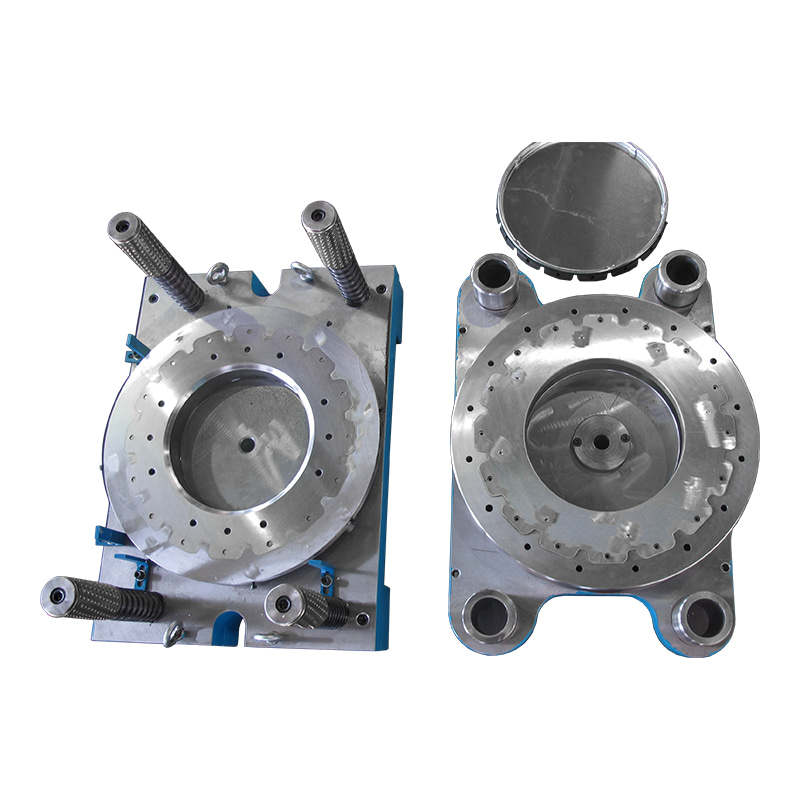
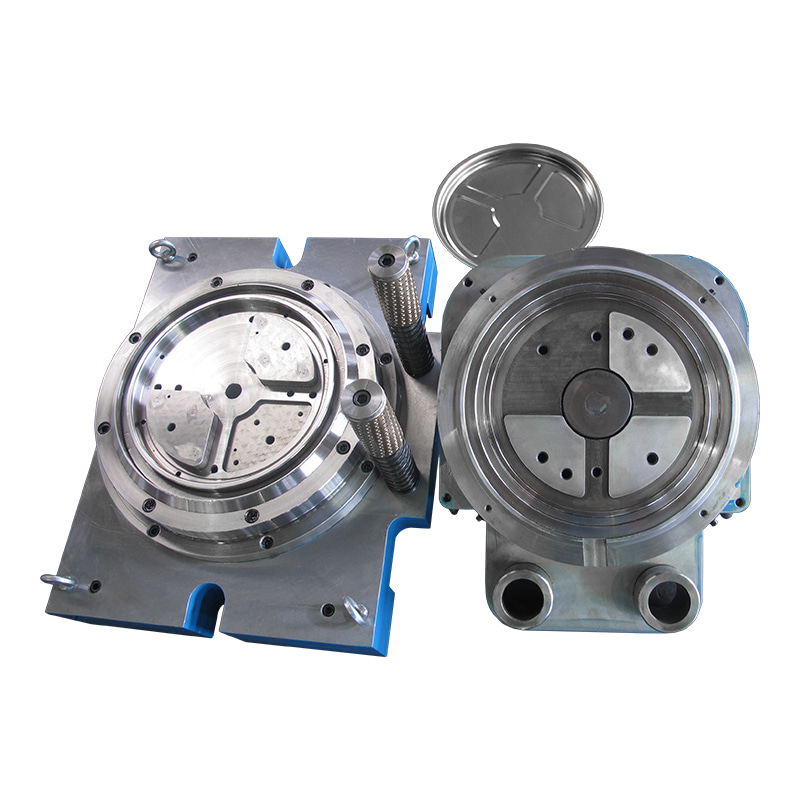
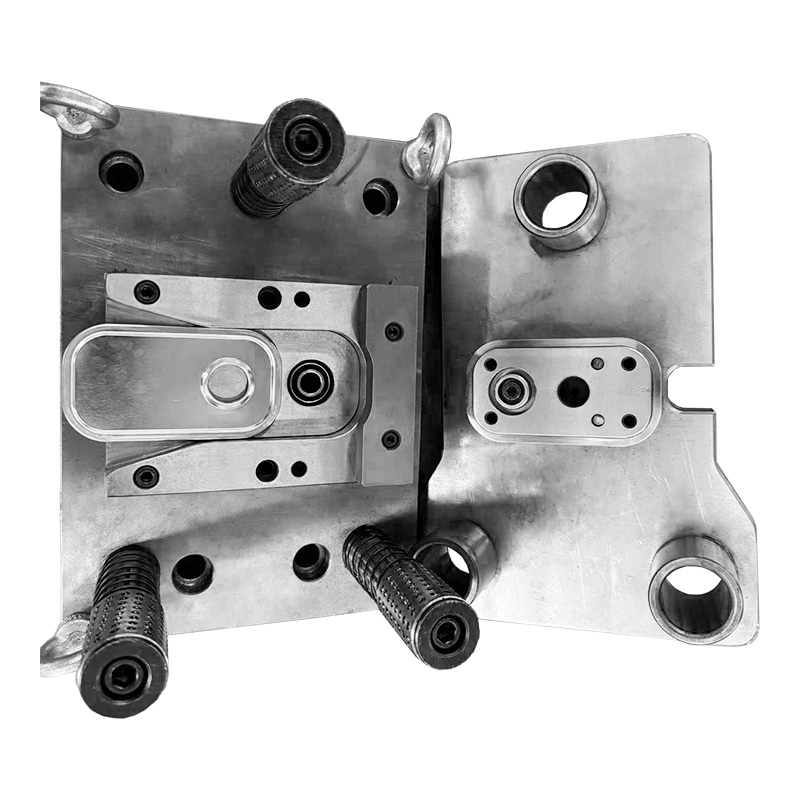
Top and bottom end panels (heads) are pressed from steel blanks in hydraulic presses using matched dies. The heads are then double-seamed onto the drum body using seaming machines — a mechanical interlocking fold that creates a leak-tight, structurally rigid joint without requiring gaskets. For tight-head drums, bung holes are formed and threaded in the top head at this stage; for open-head drums, a separate locking ring and cover assembly is added.
Coating and Drying
The assembled drum passes through cleaning, phosphating, and coating stations. Interior lining — epoxy, phenolic, or zinc-rich coating — is applied by spray or flooding systems for drums intended for corrosive, food-grade, or moisture-sensitive contents. Exterior paint is applied in the customer-specified color and may include stenciled markings. Drying ovens cure the coatings to full hardness before the expansion stage.
Expansion and Leak Testing
An internal expander head is inserted into the drum and hydraulically expanded to calibrate the drum's internal volume to exactly 200 liters and ensure roundness. Every drum then undergoes pneumatic leak testing — pressurized with air and tested by immersion or pressure-decay measurement. Drums that fail leak testing are automatically diverted to a rejection conveyor; conforming drums proceed to packaging.
Automation Technologies That Drive Line Performance
- Robotic operating arms: Handle drum bodies at transfer points between stations — eliminating operator contact with sharp-edged sheet metal and enabling 24-hour continuous operation without fatigue-related quality variation.
- Automated conveyor systems: Link each production stage with variable-speed conveyors that buffer between stations, smoothing speed differences and preventing bottlenecks that would interrupt continuous production flow.
- PLC-based process control: Programmable logic controllers monitor and adjust welding parameters, coating application, expansion pressure, and leak test protocols — maintaining consistent output quality across production shifts and material batch changes.
- 100% inline inspection: Every drum undergoes dimensional gauging and leak testing — not statistical sampling — ensuring that no defective drum reaches the customer without detection.
Industries Served by 200L Drum Production
Industry sectors using 200L drums and their specific content and specification requirements
| Industry |
Typical Contents |
Key Drum Requirement |
| Chemical industry |
Solvents, resins, acids, base chemicals |
UN certification; chemical-resistant interior lining |
| Food and beverage |
Edible oils, syrups, food additives, concentrates |
Food-grade interior lining; FDA-compliant coatings |
| Petroleum and lubricants |
Motor oils, hydraulic fluids, fuel additives |
Bung-top closure; anti-static options |
| Pharmaceutical |
Bulk drug substances, excipients |
GMP-compliant manufacturing; cleanroom lining |
| Agricultural chemicals |
Pesticides, herbicides, fertilizer concentrates |
UN certification; chemical-resistant interior |


 +86 13666712509

 English
 русский
 عربى
عربى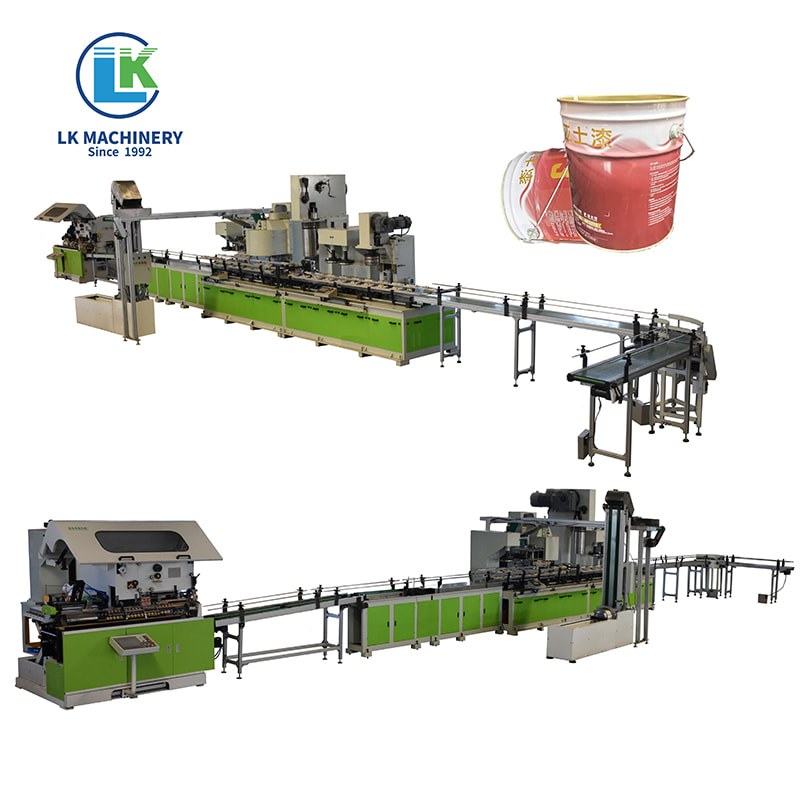



Contact Us