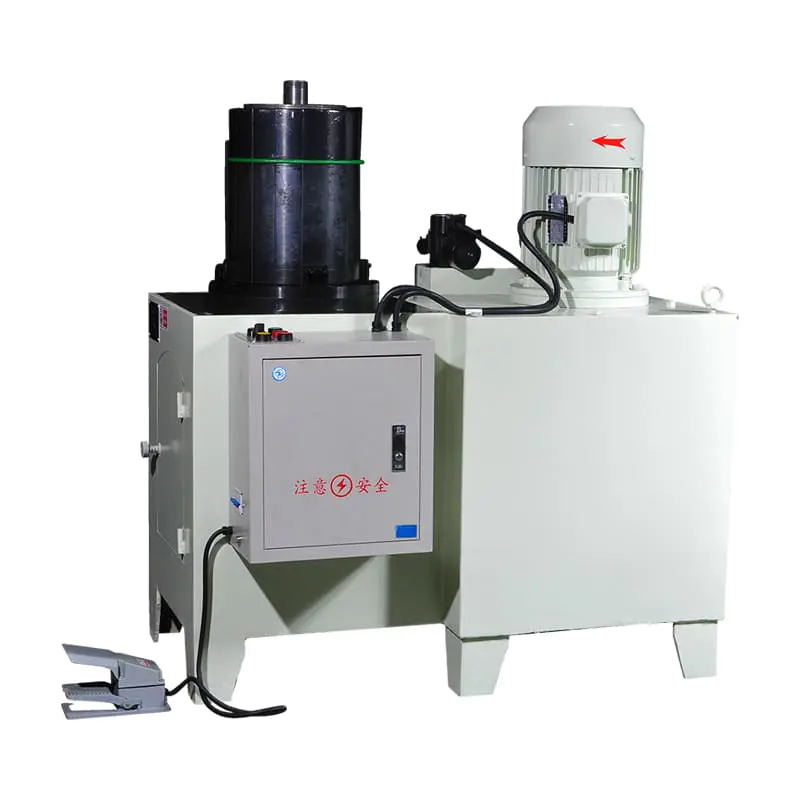
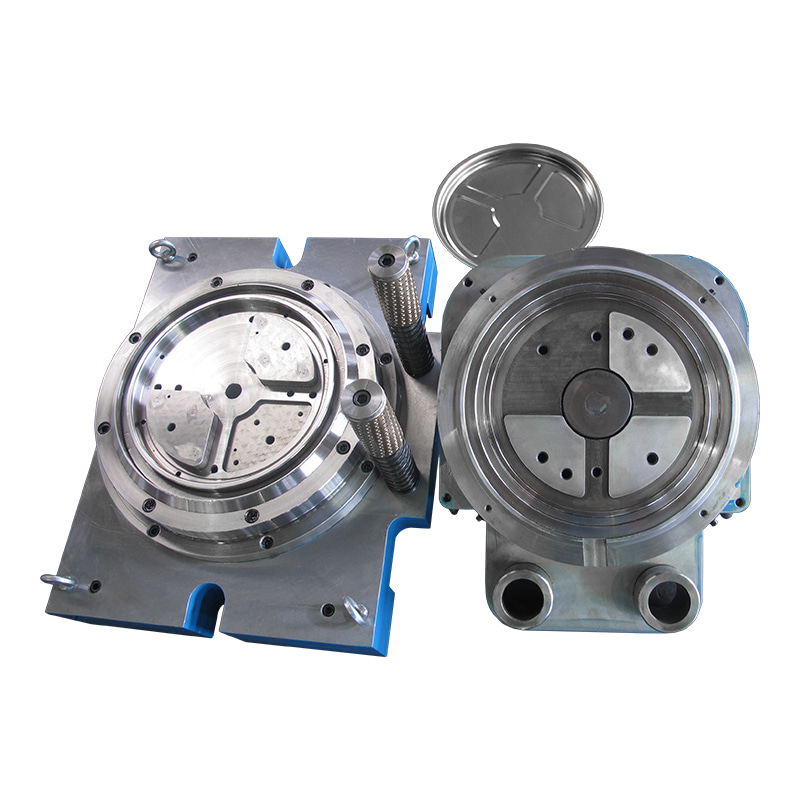
The LK/BQF400 is a heavy-duty pneumatic sealing machine designed specifically for the bottom sealing of cylindrical metal packaging containers — including vacuum cleaner dust collection barrels, sodium hydrosulfite (insurance powder) barrels, and other industrial packaging container drums. It is a full-scale production unit rated at 5–8 pieces per minute, capable of handling containers with a maximum diameter of φ430 mm and a maximum height of 700 mm, with sheet metal thickness from 0.3 to 1.0 mm. At a machine weight of 1,300 kg and a footprint of 1,400 × 1,000 × 2,000 mm, this is an industrial production-line sealing station rather than a benchtop device — purpose-built for high-throughput packaging operations requiring consistent, airtight container base seals.
Full Technical Specifications
The following specifications are sourced directly from the machine's published data sheet and define its operational envelope and infrastructure requirements.
| Parameter |
Specification |
| Model |
lk/bqf400 |
| Machine Type |
Pneumatic Sealing Machine (气动密封机) |
| Maximum Container Diameter |
φ ≤ 430 mm |
| Maximum Container Height |
≤ 700 mm |
| Sheet Metal Thickness Range |
0.3 – 1.0 mm |
| Production Capacity |
5 – 8 pieces / minute |
| Motor Power |
3 kW |
| Machine Footprint (L × W × H) |
1,400 × 1,000 × 2,000 mm |
| Machine Weight |
1,300 kg |
Official technical specifications for the LK/BQF400 Pneumatic Sealing Machine as published on the product data sheet.
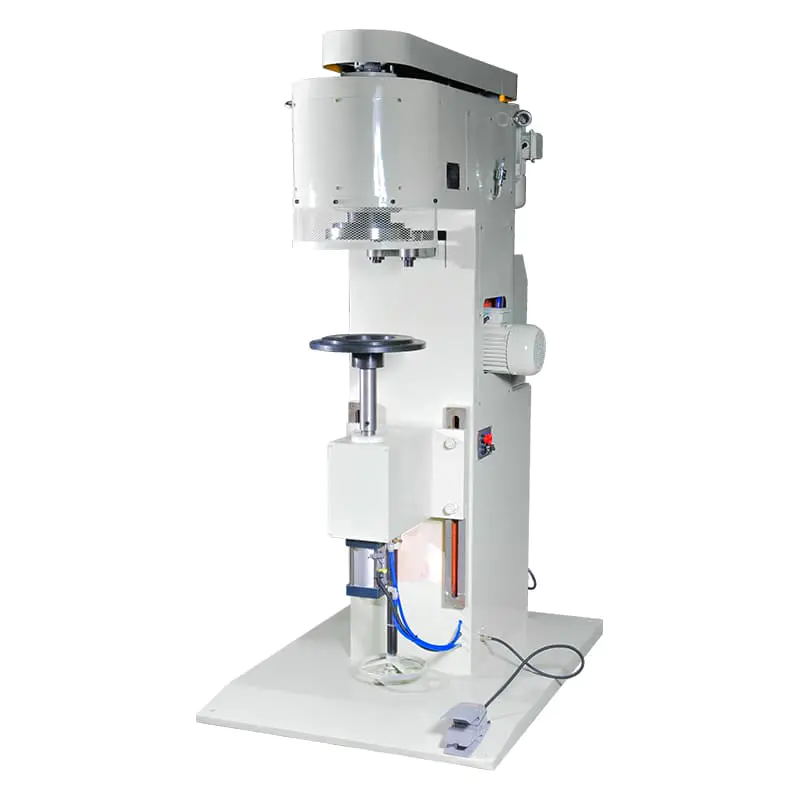
Primary Application: Bottom Sealing of Cylindrical Metal Containers
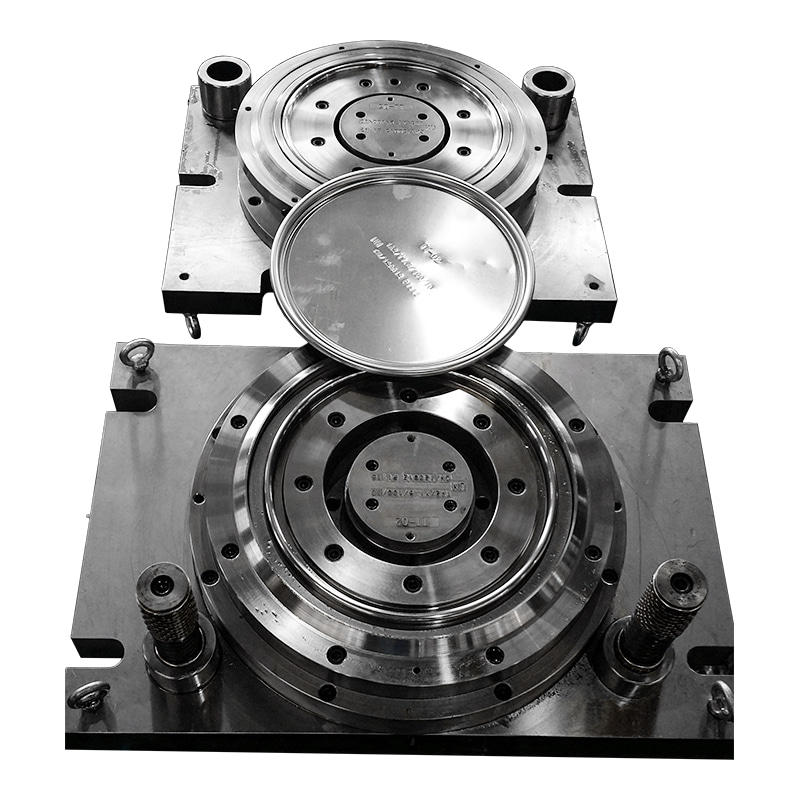
The LK/BQF400 is engineered for one specialized and demanding task — sealing the bottom of metal sheet containers after they have been formed and filled. The machine's pneumatic drive system applies the high, consistent clamping force required to crimp or press-seal the base of a metal barrel without distorting the container body or producing a leaking joint.
Vacuum Cleaner Dust Barrels
Vacuum cleaner drum-style collection barrels require a structurally sound, dust-tight bottom seal capable of withstanding the negative pressure generated by the vacuum motor during operation — typically 15–25 kPa suction pressure in commercial and industrial vacuum systems. The bottom seal must also support the full weight of collected material when the barrel is removed and transported. With a capacity to seal containers up to φ430 mm in diameter, the LK/BQF400 covers the full range of domestic and industrial vacuum drum barrel sizes in a single machine configuration.
Sodium Hydrosulfite (Insurance Powder) Barrels
Sodium hydrosulfite is a highly moisture-sensitive chemical reducing agent used in textile dyeing, paper bleaching, and food processing. It reacts exothermically with moisture and air, releasing heat and sulfur dioxide gas — making a hermetically sealed container base an absolute safety and product integrity requirement. The LK/BQF400's pneumatic system delivers consistent, calibrated sealing force on every cycle, eliminating the human variation that would otherwise create seal inconsistencies across a production shift. The machine's sheet metal range of 0.3–1.0 mm covers the thin gauge steel typically used for sodium hydrosulfite drum construction without over-stressing the base material.
Other Packaging Container Barrels
Beyond these two primary product types, the LK/BQF400 is applied across any production operation involving cylindrical metal containers with a base diameter up to φ430 mm and height up to 700 mm:
- Chemical powder drums — bleaching agents, detergent powders, agricultural pesticide powders, and industrial chemical containers requiring hermetic, corrosion-resistant bottom seals.
- Food and beverage canisters — large-format metal tins for powdered beverages, protein supplements, infant formula, and dry food products where the bottom seal is part of the tamper-evidence and shelf-life protection system.
- Paint and coating containers — metal drums for paint, varnish, and industrial coatings where the base seal must resist solvent vapor pressure and remain structurally intact during stacking and transport.
- Lubricant and petroleum product drums — oil and grease containers where base seal integrity directly affects product containment and workplace safety.
Working Principle: How the LK/BQF400 Seals Container Bases
The machine uses a pneumatically driven seaming or crimping mechanism to form a mechanically interlocked and pressure-tight bottom joint on metal cylindrical containers. The process follows a repeatable automated cycle:
- Container loading — the formed container body is positioned in the machine's holding fixture with the open base facing the sealing tooling. Guides and locating elements ensure the container is centered and held vertical for every cycle.
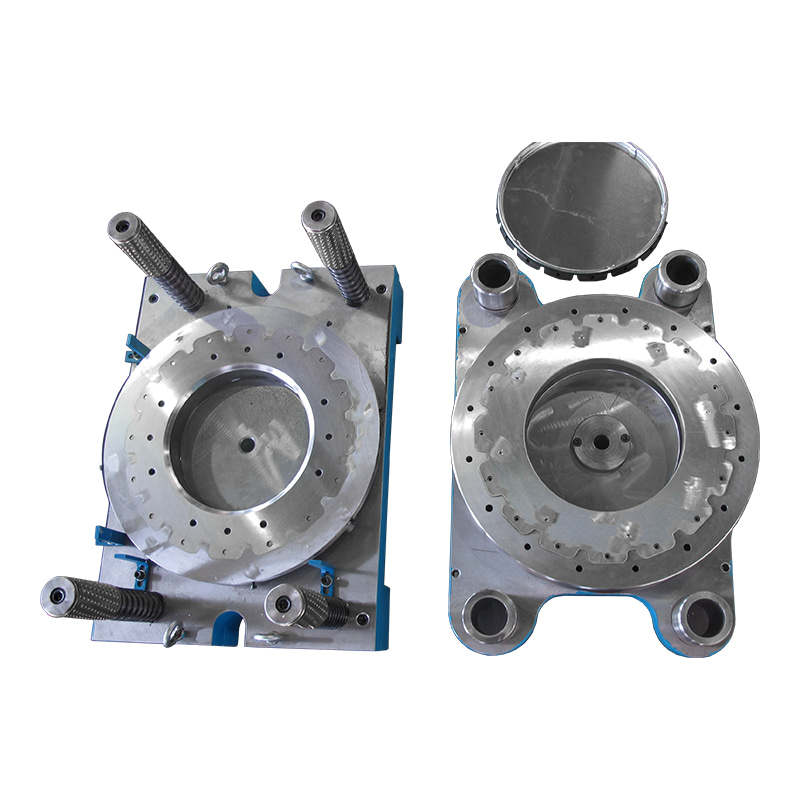
- Base end panel placement — the circular base end panel (cut from sheet metal of 0.3–1.0 mm thickness) is placed against the open base of the container body, aligned with the flange or curl.
- Pneumatic actuation — the operator triggers the cycle via foot pedal or control panel. The pneumatic cylinder drives the seaming rollers or crimping tooling into contact with the container base flange with controlled, consistent force derived from the compressed air supply pressure.
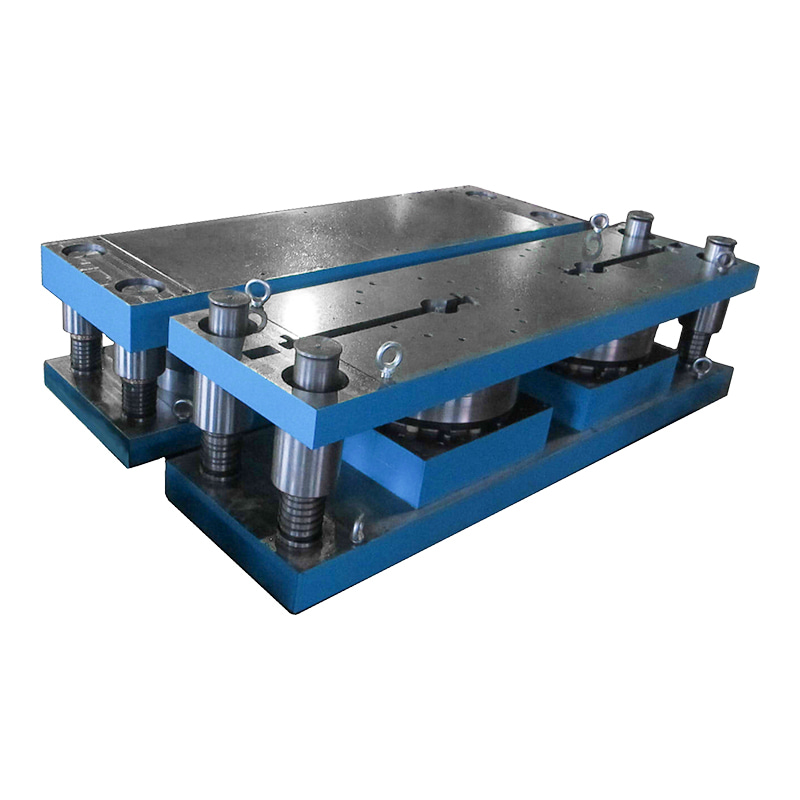
- Seam formation — the rotating seaming head rolls and folds the container body flange and base panel flange together in a double-seam configuration (or equivalent crimped joint), creating a mechanically interlocked seal that is both structurally strong and airtight.
- Cycle completion and part ejection — the tooling retracts, the sealed container is removed, and the machine resets for the next cycle. At 5–8 cycles per minute, a single operator can seal 300–480 containers per hour.
Production Capacity and Throughput Analysis
The machine's rated output of 5–8 pieces per minute makes it suitable for medium-to-high volume container packaging lines. Understanding what this means at shift and annual production scale helps in evaluating whether the LK/BQF400 is correctly sized for a given operation.
| Production Rate |
Per Hour |
Per 8-Hour Shift |
Per 250-Day Year (1 shift) |
| Minimum (5 pcs/min) |
300 containers |
2,400 containers |
600,000 containers |
| Maximum (8 pcs/min) |
480 containers |
3,840 containers |
960,000 containers |
Theoretical throughput at rated capacity. Actual output may vary with container size, material, and operator efficiency.
A two-shift operation running at average output (6.5 pcs/min) could seal approximately 1.56 million containers per year from a single LK/BQF400 machine, making it viable for mid-scale manufacturing operations without requiring multiple sealing stations.
Why Pneumatic Actuation Is Essential for Metal Container Sealing
Metal container bottom sealing requires far greater and more consistent force than flexible film or bag sealing. The LK/BQF400's pneumatic drive system is specifically suited to this demanding task for several reasons:
- High and consistent clamping force — forming a double seam on 0.5–1.0 mm sheet steel requires substantial mechanical force that must be maintained consistently across thousands of cycles per shift. Pneumatic cylinders deliver repeatable force that does not degrade with operator fatigue or mechanical wear.
- Speed and cycle control — pneumatic actuation enables the fast, controlled strokes needed to achieve 5–8 cycles per minute while giving the seaming tooling time to form a complete, tight seam before retracting.
- Adjustable force for different wall thicknesses — the air pressure regulator allows the clamping force to be reduced for thin-gauge 0.3 mm containers (preventing base distortion or wrinkling) or increased for heavy 1.0 mm wall stock — a range impossible to cover with a fixed mechanical drive.
- Safety in chemical container applications — foot pedal or remote trigger actuation keeps the operator's hands away from the sealing zone, which is particularly important when handling containers of reactive chemicals such as sodium hydrosulfite where any spillage during positioning and sealing creates a safety risk.
Installation and Infrastructure Requirements
As a 1,300 kg industrial machine, the LK/BQF400 requires proper site preparation before installation. The following infrastructure must be in place:
- Reinforced floor area — the machine's weight of 1,300 kg across a footprint of 1,400 × 1,000 mm creates a floor loading of approximately 930 kg/m². Standard industrial concrete floors rated at ≥1,000 kg/m² are required; mezzanine or elevated floor installations require structural engineering review.
- Compressed air supply — a facility compressor system with distribution piping, moisture separator, and pressure regulator providing clean, dry air at the machine's operating pressure. Compressed air quality and pressure stability directly affect seam consistency.
- Electrical supply — a 3 kW motor requires a correctly rated electrical circuit with appropriate breaker and cable sizing per local electrical codes. Three-phase supply is typically required for motors of this rating.
- Lifting equipment for installation — a forklift or overhead crane with sufficient rated capacity is required to position and level the machine during installation. The 1,300 kg weight precludes manual repositioning after initial placement.
- Ventilation — when sealing barrels for reactive chemical products, local exhaust ventilation at the sealing station is required to manage any fumes or dust released during container handling and base sealing operations.


 +86 13666712509

 English
 русский
 عربى
عربى



Contact Us